
What you Want, Find Here ↓
ToggleWhen we look at the modern health trends there is a pattern that becomes very clear. Most people are tired of complicated diets. According to global wellness surveys, nearly half of the people who are dieting quit within 3 months. It is because the meals are very restrictive and such a routine is difficult to continue.
Simultaneously, the popularity of intermittent fasting has risen exceptionally, over the past ten years and millions of individuals have embraced it as a long-term lifestyle and not a fad diet. The simplicity in this diet is making it popular. You do not have to spend a lot on meal plans or food regulations. Rather, you adopt a time-based system that operates on your natural body rhythm.
What is Intermittent Fasting?
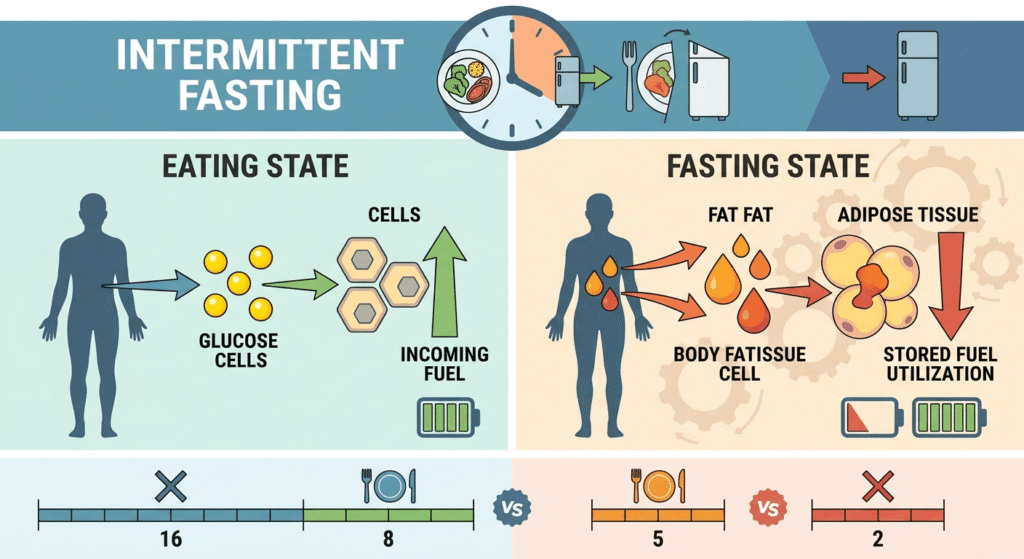
Intermittent fasting is not considered a traditional diet. It is an eating schedule, which goes through eating and fasting periods. At this stage of fasting, your body is not acquiring any new calories, this causes your body to start burning up stored energy, primarily body fats.
To put it simply, your body changes from an incoming fuel mode to a stored fuel mode. This is what distinguishes fasting from the normal eating habits.
There are a number of approaches, yet all of them are based on the same principle, to minimize eating window so that the body can have enough time to rest and reset.
Why Intermittent Fasting Has Become So Popular
It is unlike strict diets that exclude food, but instead involves timing and not restriction. Numerous users report significant changes in everyday life and health. The most popular fasting benefits are:
- Improved fat metabolism and slow weight loss.
- Less unwanted snacking and hunger.
- Better concentration and focus during fasting periods
- Less fluctuating energy levels during the day.
- Less complex life and fewer eating choices
Such fasting benefits are usually acquired over time. It is not an instant change, but a gradual change which your body gets used to with time. People will also opt for those diets that are easy to adapt and work well long term.
Choosing Your Path: Popular Methods
The beauty of this life is its flexibility. No one size fits all. You can select an intermittent fasting plan that suits your working schedule, your family life as well as your hunger levels.
The 16:8 Method
The 16:8 fasting method is the most used entry point by beginners. It means fasting for 16 hours and restricting you’re eating window to 8 hours. To the majority, this appears to be skipping breakfast, the first meal at noon and the last meal at 8:00 PM. Since a lot of the fasting occurs at night when you sleep, it seems so sustainable.
The 5:2 Method
With this plan, you eat normally five days of the week and cut down the calories to approximately 500-600 on these two days. These fasting days need not be consecutive so you can plan them during your least busy days.
Eat-Stop-Eat
This will include a complete 24-hour fast once or twice a week. Here, you may eat dinner on Monday and not eat till dinner on Tuesday. It is an advanced method and a person may find it difficult to control the hunger pangs at first.
How to Build a Sustainable Intermittent Fasting Plan?
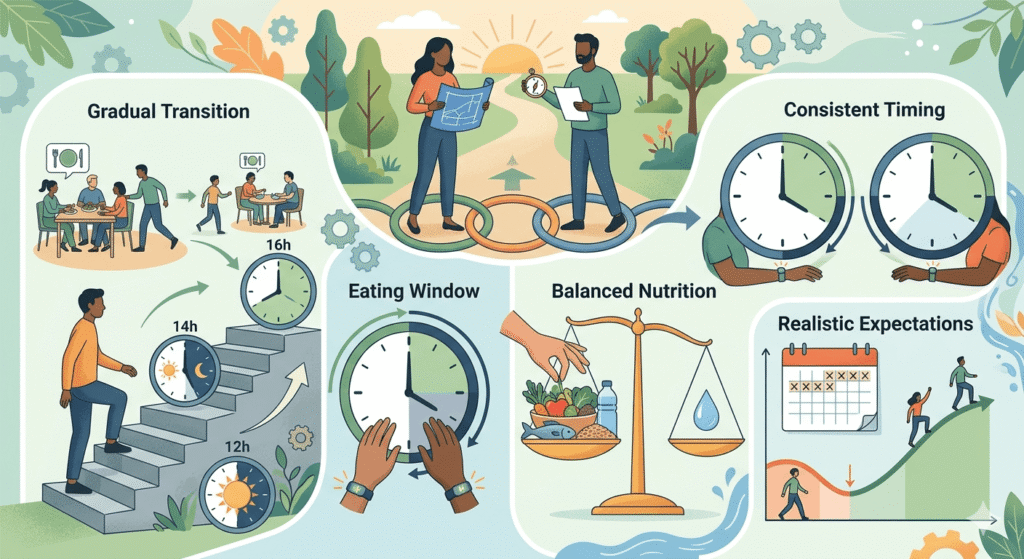
When planning a new diet, it is always best to stick to your plan instead of copying someone. The intermittent fasting plan has to be strong and consist of:
1. Gradual Transition
Don’t start with long fasting hours immediately. It will be better to start with a 12-hour fast and gradually make changes.
2. Consistent Timing
Attempt to eat and fast at the same time as much as possible. This is used in order to control the internal clock of your body.
3. Balanced Nutrition
Fasting is only a part of the process. Eating is also crucial in what you consume within your eating window.
4. Realistic Expectations
It takes time before your body adapts. Adjustment phases are the first 1-2 weeks.
The perfect diet plan is not about perfection but about time consistency.
What Happens Inside Your Body During Fasting?
There are a number of changes in your body when you go without eating after a few hours. When you start fasting your insulin level will go down. Insulin is the hormone that helps your body store energy from food. When insulin is lower your body begins to use stored fat for energy instead of keeping it safe.
After that, your body will go through a change that is known as metabolic switching. It means that rather than using sugar it uses fat as the main source of energy. This process can help in weight control and energy balance with time. The digestive system also rests regularly, and many people experience having better digestive systems.
What You Should Eat for Best Results
Intermittent fasting does not mean that you can consume anything at any time. The quality of food remains a significant factor of outcomes. A healthy IF diet must consist of:
- Eggs, chicken and fish are high in protein
- Nuts, olive oil, seeds and avocado have good fats
- Carbohydrate rich diet will have brown rice, whole wheat and oats
- Vegetables and fruits contain rich source of fiber
A balanced IF diet will ensure that energy levels are kept and that an individual does not overeat within an eating window.
Meanwhile, it is advisable to minimize:
- Sugary drinks
- Highly processed snacks
- Excess fried foods
- Refined carbohydrates
Despite fasting, eating unhealthy foods can reduce progress at a considerable rate.
Is it Different for Men and Women?
This is an important aspect. The body of women is more sensitive to indicators of energy deficiency. When a woman fasts excessively, it may disrupt her hormones. When beginning an intermittent diet as a woman, you can begin with a 12 or 14-hour window and observe your cycle and energy levels and then transition into longer fasts.
Common Beginner Mistakes You Should Avoid
The reason why a lot of people end up breaking fast early is because of simple mistakes they commit:
1. Eating Too Much During Eating Window
Some beginners compensate excessively on fasting hours and this cancels out the results.
2. Starting Too Fast
It can be easy to experience exhaustion and disappointment when starting long fasting periods.
3. Ignoring Hydration
During fasting it is very important to take water.
4. Lack of Consistency
Alteration of schedules often confuses the body and slows adaptation.
Physical and Mental Changes You May Notice
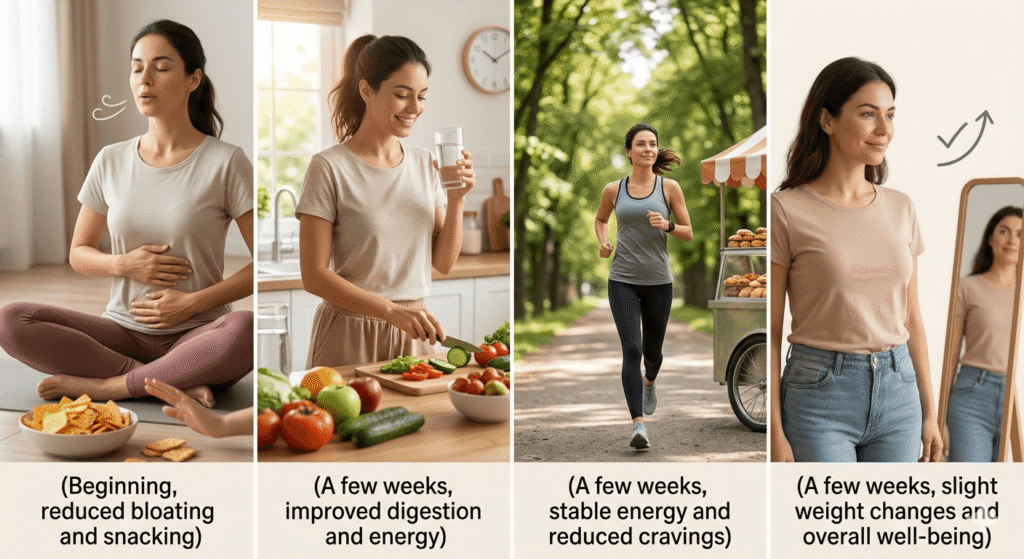
After a period of adjusting, you may start experiencing changes gradually. At the beginning, many people encounter:
- Reduced bloating
- Less frequent snacking
- Slight weight changes
- Improvements in a few weeks may include:
- Better digestion
- Stable energy levels.
- Reduced cravings
These are changes that are involved in the adaptation of the body to another pattern of eating.
Who Should Be Careful with Fasting
An intermittent fasting plan may look beneficial for healthy adults, but it is not suitable for everyone. You need to consult a physician if you are:
- Diabetic or have high blood sugar
- Pregnant or breastfeeding women should not follow any diet
- People will a history of eating disorders have to be careful
- If you have to take medications
Practical Tips to Make Fasting Easier
It becomes much easier to adapt to the strategies that are simple:
Stay Busy During Fasting Hours
The perception of hunger is decreased by distraction.
Drink Water Frequently
Hydration contributes significantly to the level of hunger.
Start Meals Slowly
Avoid heavy meals directly after fasting as it can affect your digesting. Starting slow is the best thing to follow.
Keep It Flexible
Fasting may be stressful due to a strict attitude. Adaptability enhances the success in the long term.
Troubleshooting: Why Am I Not Losing Weight?
When you have been fasting and a few weeks, but the scale is not shifting, make sure you are checking these three:
Overeating in the window: Fasting is not an excuse to consume 4,000 calories of junk food. Calories in, calories out remains important.
Hidden Calories: Are you putting a little milk or extra sugar in your tea? This does count an increase in calories.
Sleep and Stress: Cortisol is a stress hormone which stores the body fat. When it remains high you will notice a lot of fat around your mid-section.
An Easy Real-Life Example Schedule
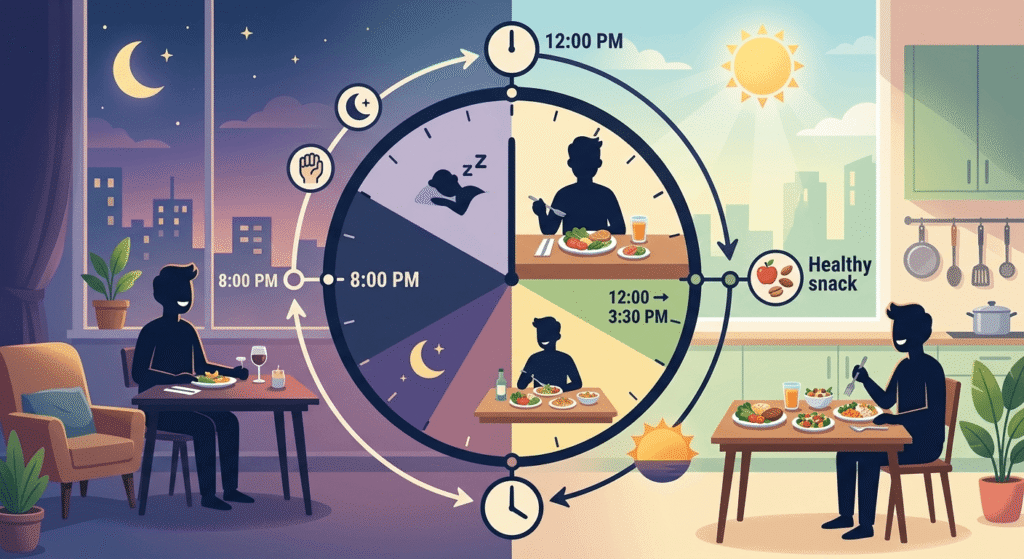
The following is an example of what a realistic beginner day would be like:
- 8:00 PM: Dinner finished
- 8:00 PM – 12:00 PM: Fasting period
- 12.00 PM: 1st meal (balanced lunch)
- 3:30 PM: Healthy snack
- 7:30 PM: Dinner
- Repeat cycle
This structure is in harmony with everyday life and minimizes stress.
Final Thoughts
Intermittent fasting cannot be a quick fix. It is a lifestyle practice. Most of the changes can be internal like better digestion and less craving in the first month. Obvious alterations such as the loss of fat might require time based on lifestyle, sleep, and the quality of food. It is not about speed but consistency.