
What you Want, Find Here ↓
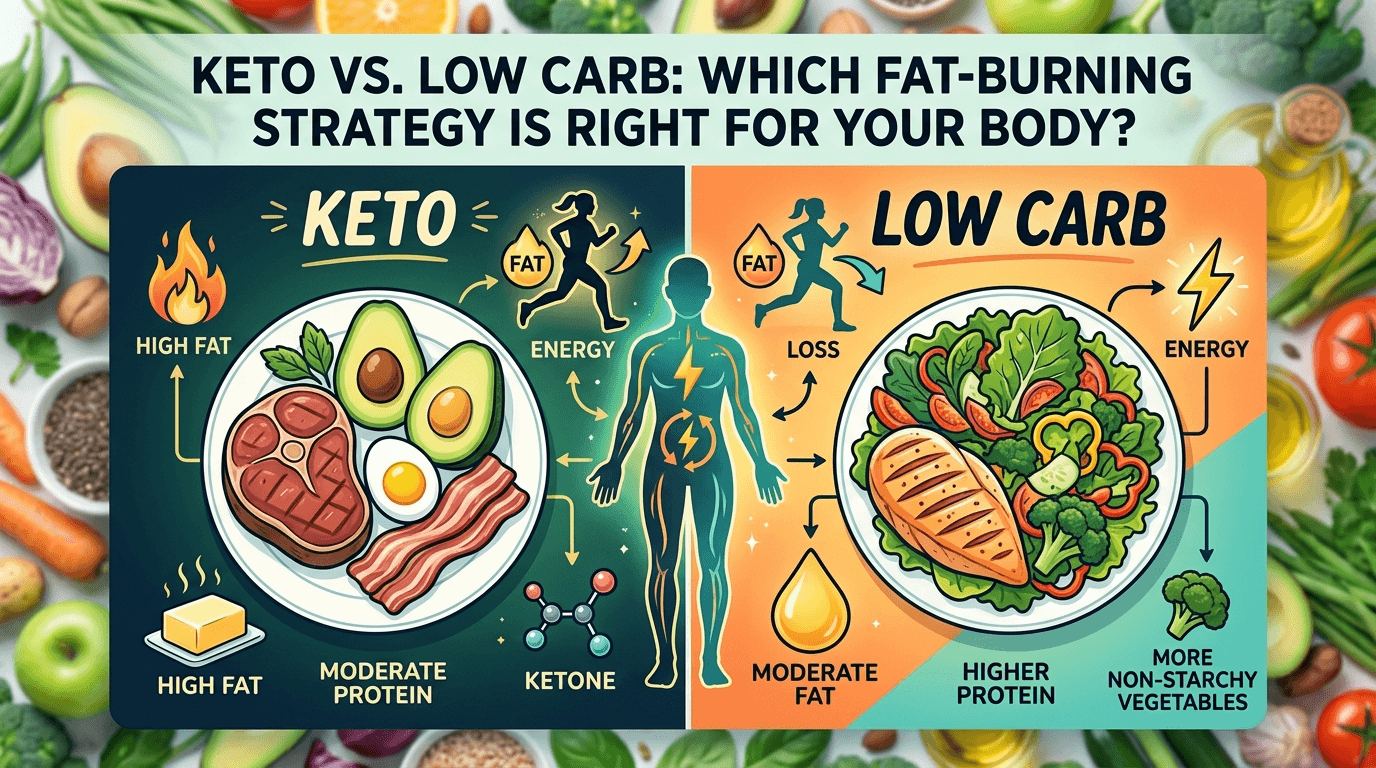
ToggleChoosing a new way of eating can be really difficult. It feels like you are staring at a map but don’t have a compass. You are sure that you will like to feel better and to be healthier, yet the road is not always easy to follow. The Keto vs low carb are two of the most discussed methods that people talk about nowadays. Although these may seem like one and the same, on the surface, they actually act very differently, within your body.
In case you have ever questioned yourself whether you need to count every gram of sugar or whether you can get away with a little more liberal approach, you have come to the right place. In this blog, we will help you understand which method is suitable for your weight loss journey. Let’s get started.
Understanding the Basics of Carb Reduction
The central theme of both of these diets is carb reduction. Since all these years we have been believing that carbohydrates are the real enemy of diet. However, refined sugar is considered even a bigger hindrance during your weight loss journey.
When you train your body to reduce carbohydrates, you are merely telling your body to stop using the steady supply of sugar as their energy source. You are training your system to be more stable, rather than riding the blood sugar roller coaster, where you eat bread or pasta, feel a surge of energy and then go crashing two hours later.
This change involves more than a bread basket avoidance. It is a basic level of change in the communication of your cells. As long as insulin is at a constant high level (because of the sugar that you are consuming), then your body remains in storage mode.
By focusing more on a lifestyle that is based on the reduction of carb, you reduce the level of insulin, and eventually, your body allows you to use up your fat stores as a source of energy.
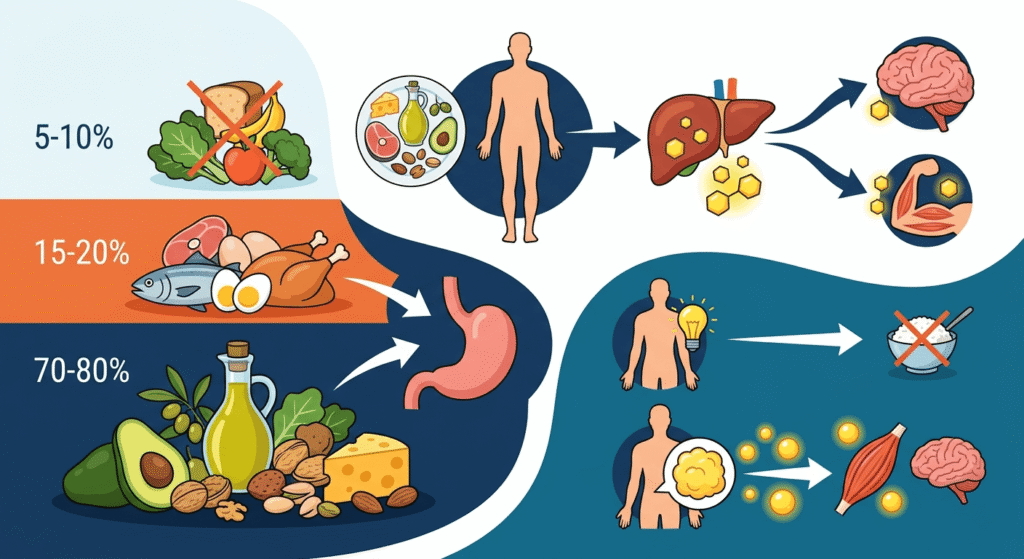
The Ketogenic diet or Keto is the stricter sibling in the low-carb family. It is not a diet; it is a metabolic condition. The aim of Keto is to place your body in the state known as ketosis. It happens when you consume very low levels of carbohydrates to the point your liver starts to convert fat into a substance called ketones that are taken up by your brain and muscles to generate energy.
To do this, the majority are forced to maintain a very low level of carbohydrate, typically less than 50 grams per day. This breakdown generally appears as follows:
- 70-80% Fat
- 15-20% Protein
- 5-10% Carbohydrates
Since the body is compelled to utilize fat as the major source of energy, most people call this the ultimate fat burning diet. It involves discipline because a single meal of high carbs will push you out of ketosis and it needs several days to restore your body.
The Science-Backed Ketogenic Diet Benefits
So why will someone bother to measure their food so carefully? The solution can be found in the particular ketogenic diet benefits that users mention. In addition to weight loss, most individuals also experience a clear state of mind when they are in ketosis.
The brain does not experience a constant flow of energy, and without the constant fluctuation in blood glucose, the situation could remove the brain fog. What is more, the studies on the advantages of ketogenic diet indicate that such a dietary practice can help keep your powerhouses of cells healthy, namely, mitochondria.
When you switch to a cleaner-burning fuel source such as ketones, then you decrease the oxidative stress that is commonly linked to high-sugar diets. This can frequently be in the form of clearer skin, a more regular flow of energy during the day, and a marked decrease in systemic inflammation.
Low Carb: The Flexible Alternative
In case Keto may sound too extreme to be followed in your everyday life, you may want to adopt a conventional low-carb diet. No official definition of what is considered low carb exists, but in general terms it is considered to be between 50 and 150 grams of carbohydrate in a day.
In this form you are not necessarily attempting to achieve ketosis. Rather, you are merely doing just carb reduction in order to improve your health. Still, you can have a bit of fruit, a bit of sweet potato, or even a slice of whole-grain bread now and then.
The beauty of the low-carb approach is that it is flexible. To a large number of people, it serves as a compromise which helps social life. You are able to have a dinner out and not be concerned that a teaspoon of sugar hidden in a sauce will undo your efforts. It is more concerned with the quality of the carbohydrates, not their complete avoidance.
Keto vs Low Carb: Which One Burns More Fat?
This is the one-million-dollar question. A comparison of Keto vs low carb would involve examining the reaction of your metabolism. Keto can be quicker in the initial weight loss since ketosis can only use fat stores as energy.
However, it also involves losing a lot of “water weight” in the first week. Since Keto is an extreme diet focused on burning fat, it is most efficient with individuals that have a lot of weight to lose or that have an insulin resistance issue.
The optimal diet is that one can follow over five years, not five days. As much as Keto has a metabolic advantage to swift fat burning, a typical low carb diet may yield superior long-term compliance for an average individual. Comparing Keto vs low carb in the long term, the two groups tend to experience the same results in terms of heart health and waist circumference as long as it is consistent.
The Role of Protein
Protein is the one that is usually lost in the shuffle in the debate of these two styles. Protein should be moderate on a strict Keto diet since the body actually converts excess protein into glucose in a process known as gluconeogenesis. But with a low-carb diet, you can afford to eat more protein.
Increasing protein is good for preserving muscle. When you are losing weight, you do not want to be losing the fat, but the muscle. Muscle is an active metabolic tissue; the larger it is the more calories it burns when at rest. With high protein and low carbs, you make sure that your body shape is transformed to the better so that you no longer look smaller, you look toned.
The Importance of Gut Health and Fiber
One of the most frequent accusations against low-carb life is the possible deficiency of fiber. A healthy gut microbiome is indispensable to fiber and affects your mood to your immune system. When you go the Keto way, you should be conscious of making high-fiber, low-carb meals such as asparagus or Brussels sprouts or chia seeds.
Fiber consumption is far easier on a typical low-carb diet as you can add little beans, lentils or even high fiber fruits such as apples. Having a healthy gut means that you will be able to digest easily and will not have the bloating that is sometimes associated with a high-fat diet. No matter what you decide to do, never give up your greens to reach a fat macro.
Hormones and the "Why" Behind Weight Loss
The subject of weight loss is usually approached as a mere calculation, calories in/out. But our bodies are not calculators, but chemical laboratories. It is operated by hormones such as insulin, leptin and cortisol. Both the Keto and low-carb diet are effective, since they correct the hormonal signaling which has been disrupted by the processed food of the present day.
The fullness hormone, leptin, will be able to talk to you again when you reduce the amount of carbs you are taking. With a high-sugar diet, a large number of individuals become leptin-resistant, which is an indicator that the brain does not receive the message that it is full. By changing your metabolism, you are back in charge of your appetite and losing weight becomes more of an extension of being healthy, rather than a daily exercise of willpower.
A 7-Day Plan: What You Should Eat?
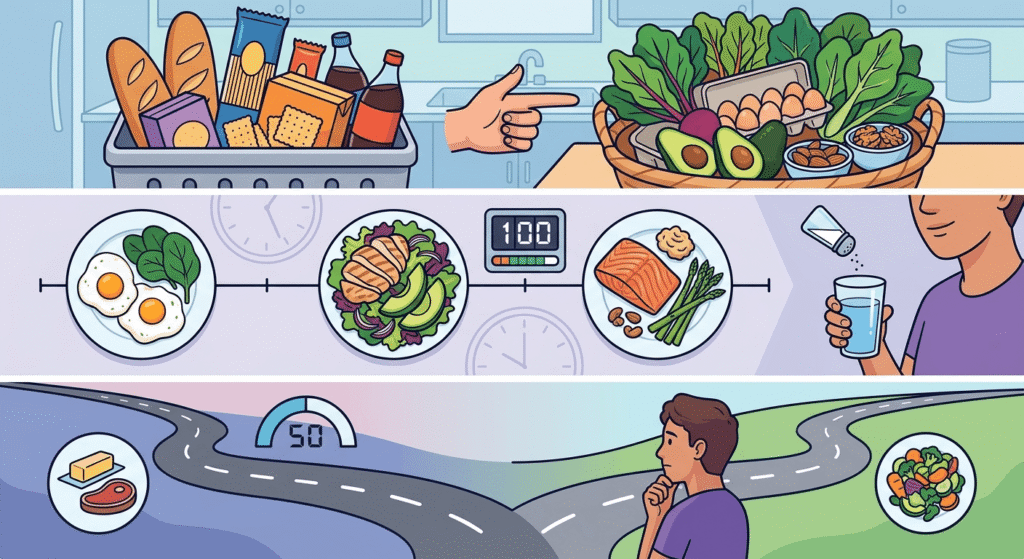
In case you are willing to begin, do not make it too complicated. The following is a basic means of doing the transition within the next week:
Days 1-2: The Clean Out
Keep out of your kitchen all bread, pasta, crackers and sweetened beverages. Substitute them with eggs, avocados, nuts, and greens.
Days 3-4: The Adjustment
Pay attention to eating three square meals. There is no need to be concerned about calories, just remember not to exceed 100 grams of carbs. Take lots of salted water lest you get tired.
Days 5-7: The Decision
At this point, the sugar craving must be subsiding. Choose whether you would continue to go into Keto (below 50g) or feel satisfied with the low-carb level.
Final Thoughts
The winner in the battle of Keto vs low carb is not universal, it is the winner to your body. Both techniques provide unbelievable health benefits, such as improved heart health and a more stable energy level.
Keto is fantastic when you want to start a powerful fat burning diet. But when you want to have a middle ground that will help you to be more varied, a low-carb lifestyle is a long-term solution to lose weight forever. Being mindful of your body, hydrating, and working towards the long-term objective of having to feel your best each and every day.