
Quick note: this is general info, not medical advice. If you have gut issues, IBS, or you’re on medication, talk to your doctor or a dietitian before you overhaul your diet.
Fiber finally got its moment, huh?
Every few months the internet finds a new thing to “max.” Proteinmaxxing. Sleepmaxxing. Looksmaxxing. Now it’s fibermaxxing.
And honestly? This one might actually be worth the hype.
Fibermaxxing just means deliberately eating enough fiber every day — not a crazy amount, just the amount your body was supposed to get all along. Which, spoiler, most of us don’t.
Only about 1 in 10 Americans hits their fiber target. The average adult in the US gets something like 10 to 15 grams a day. The target is roughly 25 grams for women and 38 grams for men, or about 14 grams for every 1,000 calories you eat. So yeah, most of us are running at about half.
No wonder our guts are grumpy.
Fiber used to be the boring nutrient. The one nobody talked about at dinner parties. Protein got all the attention, fiber just sat there in the corner in a bowl of bran. But now TikTok’s full of people sprinkling chia seeds on everything and counting grams like it’s a sport, and — for once — the science actually backs the trend up.
Wait, what does fiber even do?
Okay, quick version, no textbook voice, I promise.
Fiber is the part of plant food your body can’t digest. It travels through to your colon, where two things happen. It adds bulk, which keeps things moving, and it feeds the trillions of microbes living in your gut. Those microbes? They influence way more than digestion — your immune system, your mood, your blood sugar, all of it.
There are two main types, and you need both.
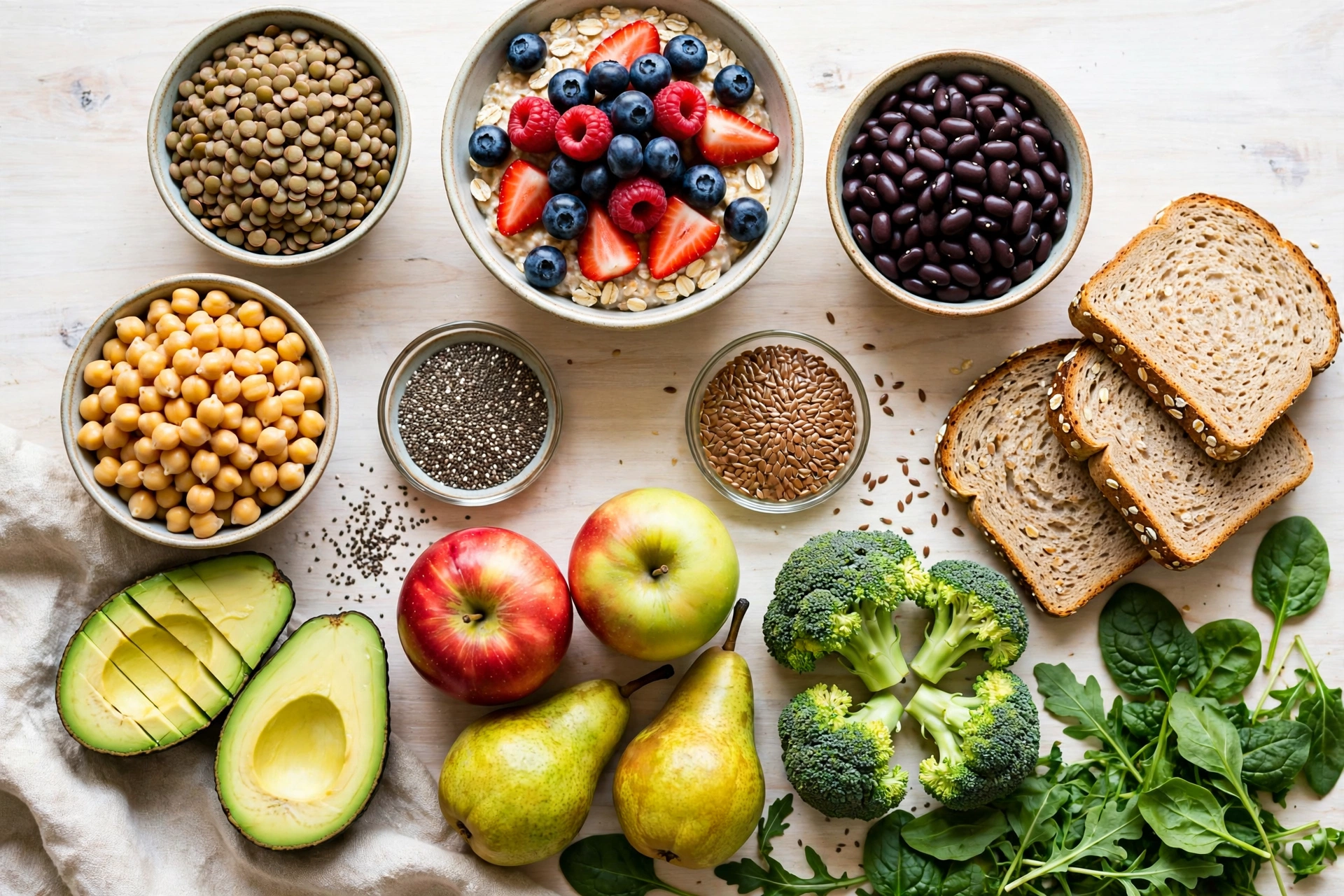
Soluble fiber dissolves in water and turns into a kind of gel. It slows digestion down, keeps you full longer, and helps with cholesterol and blood sugar. Oats, beans, lentils, apples, pears, chia seeds — that’s soluble fiber territory.
Insoluble fiber doesn’t dissolve. It adds bulk and speeds things along. Whole grains, wheat bran, nuts, veggie skins, leafy greens — that’s the insoluble side.
Most high-fiber foods have a bit of both, so don’t stress about sorting them perfectly. Eat a variety of plants and you’re covered.
And the benefits aren’t just “regular bathroom trips,” though that’s a big one. Adequate fiber is linked to lower risk of heart disease, type 2 diabetes, obesity, and colorectal cancer. It helps with blood sugar control, it feeds your gut microbiome, and it keeps you full — which, if you’re trying to lose weight, is kind of a big deal.
So how much do you actually need?
Here’s the simple version, from the National Academy of Medicine:
Women 50 and under: 25 grams a day. Women over 50: 21 grams.
Men 50 and under: 38 grams a day. Men over 50: 30 grams.
Or, if you hate remembering numbers by age and gender, just use the 14 grams per 1,000 calories rule. Eat 2,000 calories? Aim for about 28 grams of fiber.
Now, before you panic — you’re probably not as far off as you think, and you don’t need to hit the target tomorrow. Going from 12 grams to 35 grams overnight is a recipe for bloating, gas, and regretting all your life choices. We’ll get to the slow way in a minute.
The foods that actually move the needle
Not all fiber is created equal, and some foods are just stupidly good at this.
Lentils are the king here. A cup of cooked lentils has around 12 to 15 grams of fiber. Black beans, same ballpark. Chickpeas, about 12 grams a cup. That’s half your day in one bowl of soup, basically.
Chia seeds are the cheat code. Two tablespoons — that’s it, a tiny amount — packs close to 10 grams of fiber. Sprinkle them in yogurt, oatmeal, a smoothie, whatever. They basically disappear, taste-wise.
Oats are another easy win. A bowl of oatmeal in the morning gets you about 4 grams, more if you throw berries on top. Raspberries, by the way, are sneaky good — a cup has about 8 grams. A pear with the skin on, about 6 grams. An apple, about 4.
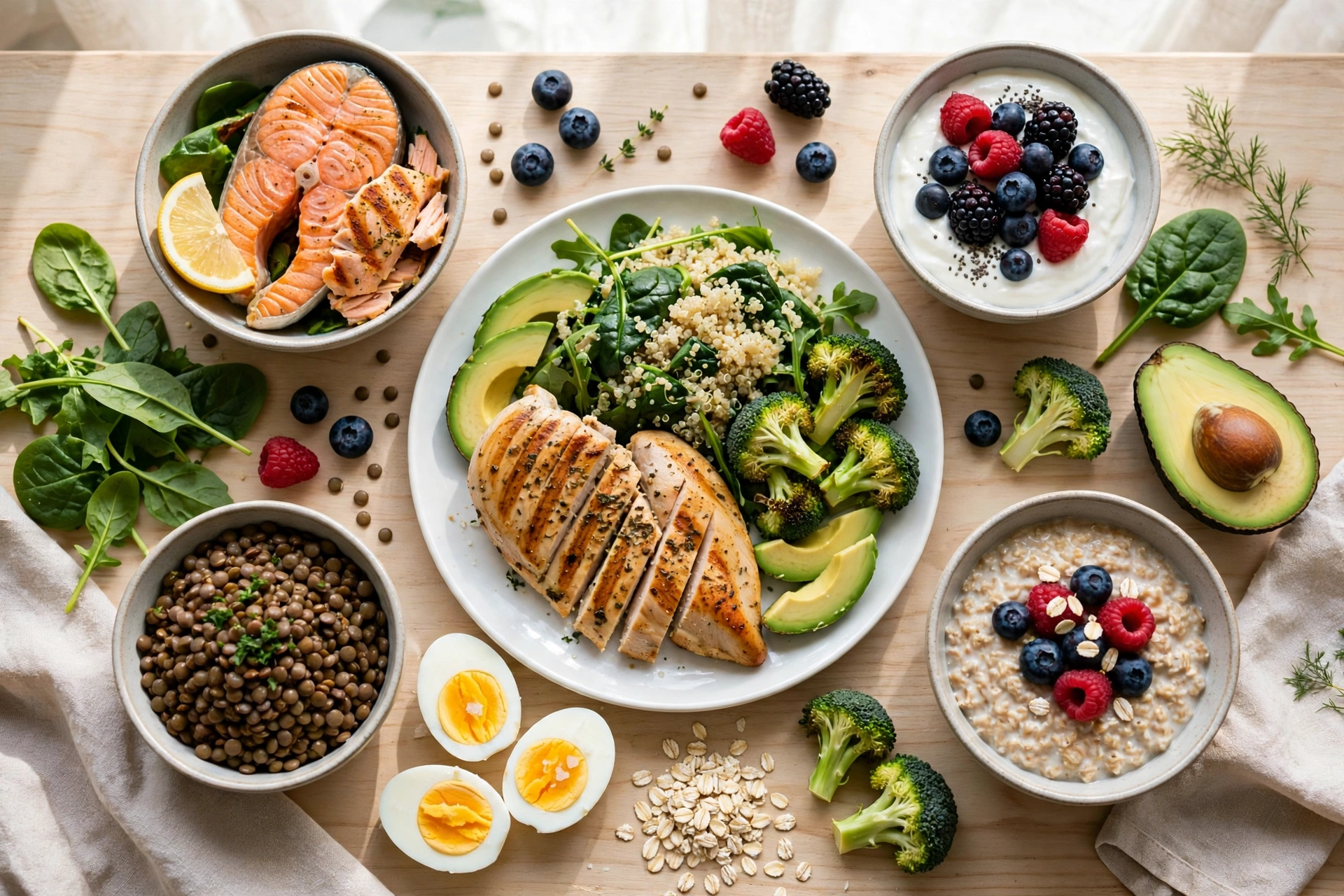
And the everyday stuff adds up fast: whole wheat bread instead of white, brown rice instead of white rice, broccoli, Brussels sprouts, carrots, spinach, avocado, almonds. None of these are exotic. They’re already in the supermarket.
The trick isn’t finding one magic fiber food. It’s stacking small wins across the day.
How to start without feeling awful
This is the part most fibermaxxing videos skip, and it’s the most important part.
Go slow. Seriously.
Add about 5 grams a day, every few days, not 20 grams all at once. Your gut bacteria need time to adjust. Give them a week or two to catch up.
And drink water with it. Fiber without water is like… trying to push a dry sponge through a pipe. It just gets stuck. Fiber soaks up water, so you need more of it. Keep a bottle nearby, don’t wait until you’re thirsty.
A simple way to start:
Breakfast: swap your usual cereal for oats with berries and chia seeds. That’s already 8 to 10 grams before you’ve even left the house.
Lunch: add beans or lentils to a salad or soup. Or swap white bread for whole wheat. Small change, big fiber jump.
Snack: an apple with a handful of almonds, or carrots and hummus. Hummus is chickpeas, remember? Fiber in disguise.
Dinner: half your plate veg, and swap white rice for brown rice or quinoa.
That’s it. No fancy powders, no 40-gram challenge on day one. Just a few swaps, repeated daily.
What about fiber supplements?
They can help, especially on days when real food just isn’t happening. But they’re a backup, not the main event.
Whole foods give you fiber plus vitamins, minerals, antioxidants — all the stuff a powder can’t replicate. A varied, plant-rich diet does most of the work, and the supplements just fill the gaps.
If you do use one, start small, drink plenty of water, and — again — talk to your doctor first if you take medication, because fiber can affect how some medicines are absorbed.
The mistakes people make (so you don’t have to)
One: going too fast. I said it already, I’ll say it again. Jumping from 10 grams to 35 grams in a day is how you end up bloated and gassy and convinced fiber hates you. It doesn’t. You just rushed it.
Two: fiber without water. See above. Water, water, water.
Three: only eating one fiber food on repeat. Your gut microbes like variety. Different plants feed different bacteria. Mix it up — beans one day, oats the next, berries, greens, nuts, seeds.
Four: forgetting that processed “high fiber” bars and cereals aren’t the same as whole foods. Some of them are fine, some are basically candy with added fiber. Check the sugar.
Five: thinking more is always better. The goal isn’t to eat as much fiber as humanly possible. It’s to hit your target, consistently, without feeling miserable. More isn’t better if you’re bloated all day.
A sample day, for real this time
Not a perfect day. A doable one.
Breakfast: oatmeal with raspberries, blueberries, and a tablespoon of chia seeds. Around 10 grams of fiber, and you’re full till lunch.
Lunch: lentil soup, or a black bean taco bowl with brown rice, avocado, and salsa. That’s easily 12 to 15 grams.
Snack: a pear and a handful of almonds. Another 7 or 8 grams.
Dinner: grilled chicken or tofu, roasted broccoli and Brussels sprouts, quinoa on the side. Another 8 to 10 grams.
Add it up and you’re at 35 grams or so, without counting a single gram at the table. That’s fibermaxxing, without the spreadsheet.
Quick questions
Is fibermaxxing safe? For most healthy adults, yes — if you increase gradually and drink enough water. If you have IBS, diverticulitis, or other gut conditions, check with your doctor first.
Can fiber help with weight loss? It can help, yeah. It keeps you full longer, slows digestion, and helps with blood sugar — so you’re less likely to snack an hour later. It’s not magic, but it makes the rest of the diet a lot easier.
Do I need to count grams every day? No. Use the numbers as a guide for a week or two, get a feel for what a high-fiber day looks like, then just eat that way. Nobody wants to count fiber forever.
What if I get bloated? Back off a bit, drink more water, and increase more slowly. Bloating usually means you went too fast, not that fiber is bad for you.
The bottom line
Fibermaxxing sounds like another internet trend, and it is — but it’s one of the rare ones with real science behind it.
You don’t need a special diet, a supplement stack, or a 40-gram challenge. You just need more plants, more variety, a bit more water, and a little patience while your gut catches up.
Start with one swap. Oats in the morning. Beans at lunch. Chia seeds in your yogurt. One thing.
Do that for a week, then add another. Your gut — and honestly, your energy, your blood sugar, your heart — will notice before you do.
Disclaimer: This is general information only and is not medical advice. It does not replace advice from a qualified healthcare professional or registered dietitian.