
Quick note before we start: this is general info, not medical advice. Talk to your doctor or a dietitian before you change your diet on a GLP-1. Your body, your dose, your call — with them.
Okay, so food just… stopped making sense?
Here’s a thing that happened to a friend of mine — well, more like a bunch of people I keep hearing from, same story, different city.
She starts Wegovy. First week, she’s thrilled. No cravings. No 3 p.m. vending machine run. She thinks, finally, this is easy.
Third week? She’s standing in her kitchen at like 11:47 a.m., fridge open, staring at leftovers, and she feels… nothing. Not hungry. Not full either. Just blank. And tired. Like, bone-tired, even though she slept eight hours.
Sound familiar?
That’s the weird trade-off with Ozempic, Wegovy, Mounjaro, Zepbound — all of them. Your appetite goes quiet, which is the point, right? But then the food you do eat has to do double duty. Less food in, so every bite needs to count more. And if it doesn’t? You lose muscle along with fat, you get constipated, you feel wiped out, and one greasy takeout night can ruin your whole evening.
No one gives you a meal plan with the prescription, by the way. I wish they did. There’s no official GLP-1 diet. Just a pattern dietitians keep coming back to, and it’s honestly pretty unsexy: protein first, plants, fiber, a little fat, water. That’s the whole secret. The rest is just figuring out how to live it without hating your life.
Your stomach is now on slow mode
Think of it like this. Normally your stomach is a highway. Food goes in, moves along, done.
On a GLP-1 it’s a country road. Slow. Food sits there. You get full fast — like, halfway through a sandwich fast — and you stay full.
Which explains a lot, actually. Why a normal dinner feels huge now. Why fries, of all things, can turn into four hours of nausea. Why you can be stuffed and undernourished at the same time, which sounds impossible until it happens to you.
People on these meds ate about 14% fewer calories on average in real-world tracking. Some way less. And in the big STEP and SURMOUNT trials, about 25 to 40% of the weight lost was lean mass — muscle — when protein and movement weren’t looked after. Yeah. That number stopped me too.
So the goal isn’t eat as little as possible. It’s lose fat, keep muscle, don’t feel awful doing it.
Protein first, and I mean FIRST
I’m going to sound like a broken record here, sorry, but: eat your protein first.
Before the bread. Before the fries. Before anything else on the plate.
Chicken first. Eggs first. Yogurt first. Then the rest, if you still want it.
Why? Two things. It keeps you full, and it protects muscle while you’re eating less. Add a bit of strength training — squats in your living room count, I’m not talking about a gym membership you won’t use — and you’re in much better shape.
How much, though? Ugh, the numbers. There’s no one answer, which is frustrating.
A 2025 advisory from four medical groups said the basic RDA is 0.8 grams per kilo a day, 1.2–1.6 grams per kilo has been suggested while you’re actively losing weight, and a simpler 80–120 grams a day is easier for a lot of people to remember. Pick the one that doesn’t make your head hurt.
Easier version: 25–30 grams per main meal. That’s a palm-and-a-half of chicken. A cup of Greek yogurt. Two eggs and some beans.
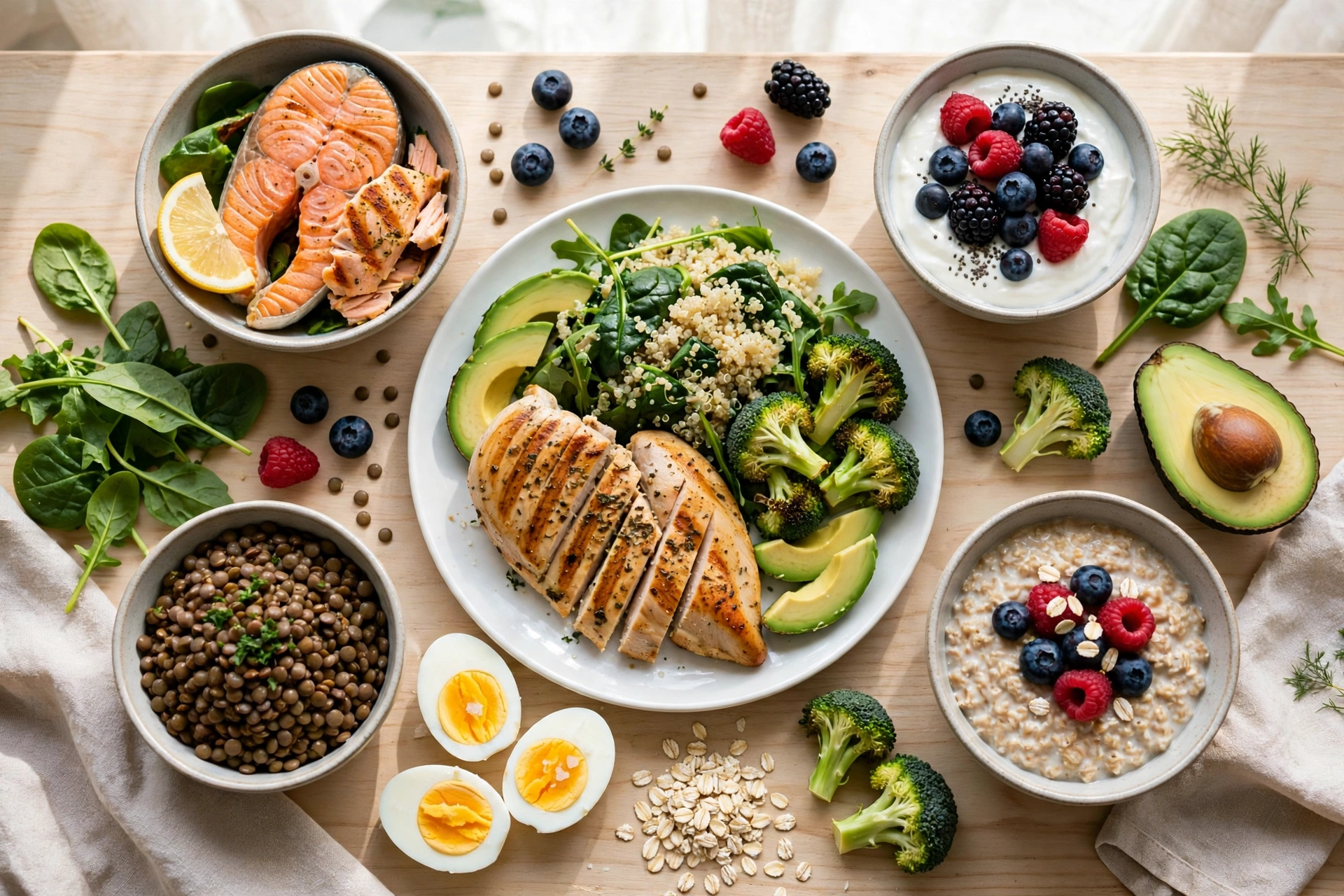
Real food, not fancy stuff: chicken, turkey, fish, salmon, eggs, cottage cheese, tofu, lentils, beans, edamame. Stuff you can get at Costco or Walmart or wherever you normally shop.
And nausea days? A protein shake is fine. It’s not cheating. It’s survival. Drink it, move on.
Fiber, water, and… yeah, constipation
Let’s just say it. Constipation is probably the side effect people are most embarrassed about, and it’s super common on GLP-1s.
Fiber helps. But — and this is a big but — only with water. Fiber without water just makes bloating worse. Don’t learn that the hard way like a lot of us did.
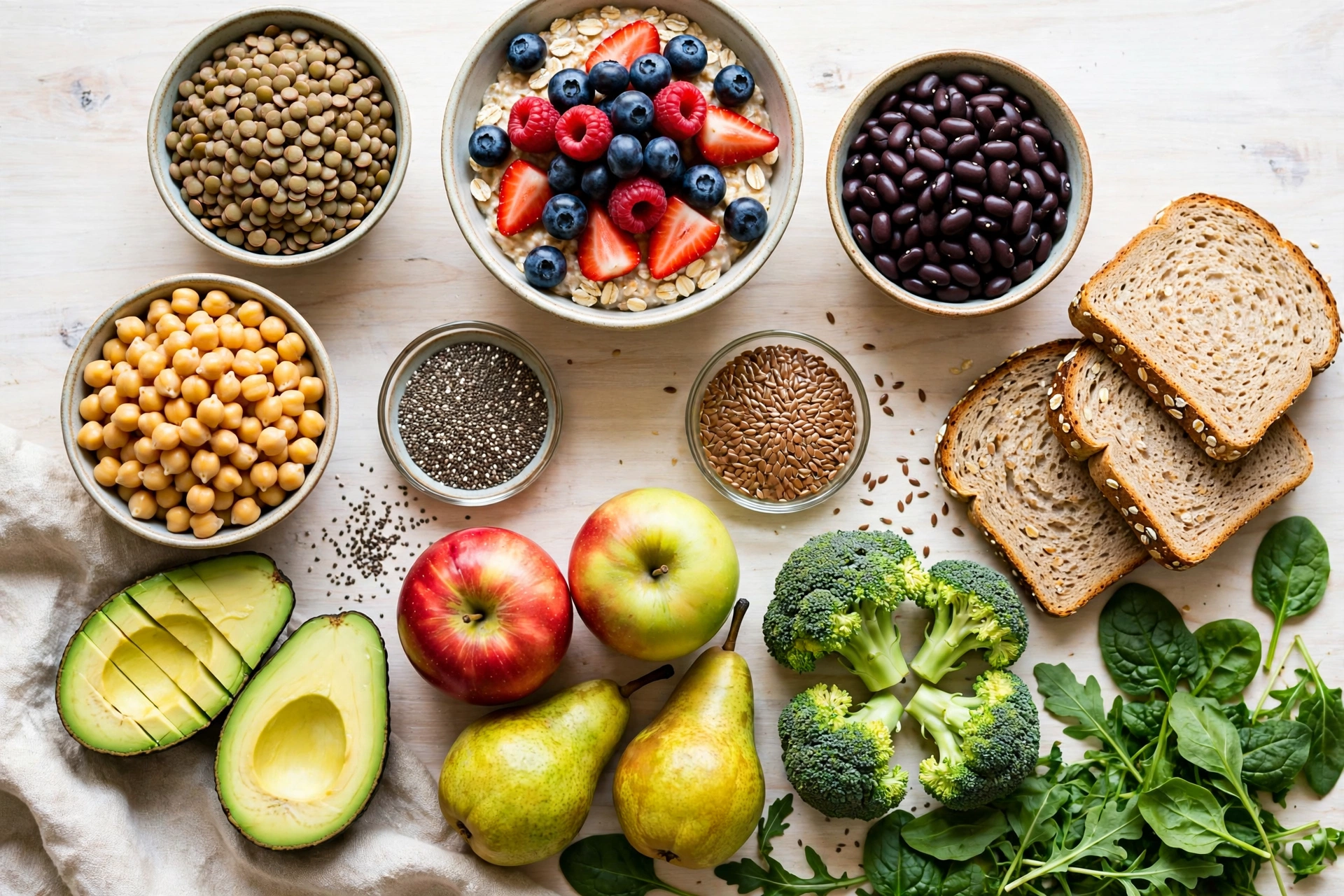
So go slow. Don’t jump from no fiber to a giant bean burrito in one day. Add a little each day. Oats in the morning, quinoa at lunch, some berries, an apple, broccoli, spinach, whatever’s in the fridge.
Water: most guides say around 64 ounces a day, about two liters. Herbal tea counts. And your thirst drops along with your hunger, so don’t wait till you’re thirsty — keep a bottle on your desk, in your car, next to the couch. Wherever you’ll actually see it.
Bad nausea flare? Ease off fiber for a day or two, eat bland stuff, then bring it back. Yogurt with live cultures, kefir, sure, they help a bit. They’re not magic, though. The fiber does the heavy lifting.
Fat — a little goes a long way, a lot goes… badly
You don’t need to cut fat out completely. Please don’t.
Just go easy. Fat is already slow to digest, and now your stomach is slow anyway. Put them together and a heavy creamy meal can just sit there for hours.
Olive oil drizzle, quarter avocado, handful of nuts — fine, fine, fine.
Deep-fried anything with cream sauce? That’s usually the one that has you up at 2 a.m. regretting your choices.
Stuff that trips people up (ask me how I know)
Okay, rapid fire, because if I list these like a textbook you’ll stop reading:
Fried food. Fries, fried chicken, heavy burgers. It sits, it ferments, you feel sick. Classic.
Sugar. Soda, juice, candy, ice cream, those giant sweet coffees from Starbucks. Tons of calories, no staying power, blood sugar all over the place.
White bread, white pasta in huge portions, sugary cereal. Same story.
Fizzy drinks — soda, seltzer, sparkling water, beer. All that air? Bloating. Burping. At work. Fun.
Alcohol. Worse nausea, worse reflux, empty calories.
Spicy food? Some people are fine. Some people learn after one bad curry. You’ll find out which one you are.
And portions. Even healthy food can overwhelm you now. Stop when you first feel full, not when the plate’s empty. That one habit? Game changer. Seriously.
A day that actually works (not a perfect day, a real one)
Breakfast: Greek yogurt, berries, chia seeds, a boiled egg. About 30 grams protein. Five minutes. Done before 9 a.m.
Lunch: grilled chicken, quinoa, broccoli, avocado, lemon, olive oil. 30–35 grams. Filling, not heavy.
Snack: cottage cheese and apple. Or a shake if solid food sounds gross. No judgment here.
Dinner: baked salmon, brown rice, green beans or spinach. 30–35 grams.
All day: water, herbal tea, small slow meals. Nausea worse after a dose increase? Plain crackers about 30 minutes after your dose, ginger tea. If it doesn’t settle, call your prescriber. Don’t tough it out.
When nausea hits
Little meals, often. Slow down — like, put your fork down slow.
Bland food when you’re queasy. Steamed, baked, boiled. Not fried.
Keep protein and fluids going even on bad days, even if it’s just soup and a shake.
Short walk after eating, ten minutes, gentle. Helps more than you’d think.
And if you get severe stomach pain that won’t go away, or vomiting/diarrhea that keeps going? Call your doctor right away. Not a wait-and-see thing.
The mistakes I keep seeing
Too little protein. Easiest mistake, because you’re just not hungry. Also the most costly.
Forgetting water. Thirst drops too, remember?
Fiber too fast. Big jump + no water = bloating city.
Living on bars and shakes. Handy, yes. But whole food gives you fiber and nutrients a bar can’t. Backup, not the plan.
And chasing one magic food. There isn’t one. No food burns fat by itself. It’s the pattern — protein, fiber, plants, fluids — day after day. Boring? Kind of. Does it work? Yeah.
Wait, what about…?
Is there an official GLP-1 diet? No. Same principles for Ozempic, Wegovy, Mounjaro, Zepbound.
How much protein? A lot of clinicians say 1.2–1.6 grams per kilo a day while losing weight, or 80–120 grams a day simpler. Check with your doctor for your number.
Coffee? Usually yes, in moderation. Doesn’t count as water, though. If it makes reflux worse, cut back or switch to tea for a few days.
Can’t eat enough because of nausea? Smaller, blander, lower-fat. Shakes, soups, cooked veg. And if it keeps going, call your prescriber instead of just eating less and less.
Last thing
This isn’t a strict diet. It’s not a list of rules to feel guilty about.
It’s just… making a smaller appetite work for you.
Protein first. Fiber and plants. A little fat. Water. Easy on the fried, sweet, fizzy, boozy stuff.
Don’t try to change everything this week. Pick one thing. Protein at breakfast. Water with every meal. One thing.
Start there. The boring little habits are the ones that actually stick — and they’re the ones that protect your muscle and help the weight stay off.
Disclaimer: This is general information only and is not medical advice. It does not replace advice from a qualified healthcare professional or registered dietitian.