

What you Want, Find Here ↓
ToggleWhen we think about losing weight, our focus always goes on what we eat in a day. Usually people start counting every calorie and think about cutting down processed sugar and heavy carbs. They think loading their plates with all the green vegetables is the way to go. However, you need to understand that when you eat is equally important to how many calories you take.
According to science our bodies are not just simple calorie burning machines. They work according to the internal clocks. If you want to get good results it is necessary to align your meals with your biology. It will quickly turn out to be a game changer. In this blog we will discuss what is the best time to eat for weight loss.
Does Meal Timing Really Matter?
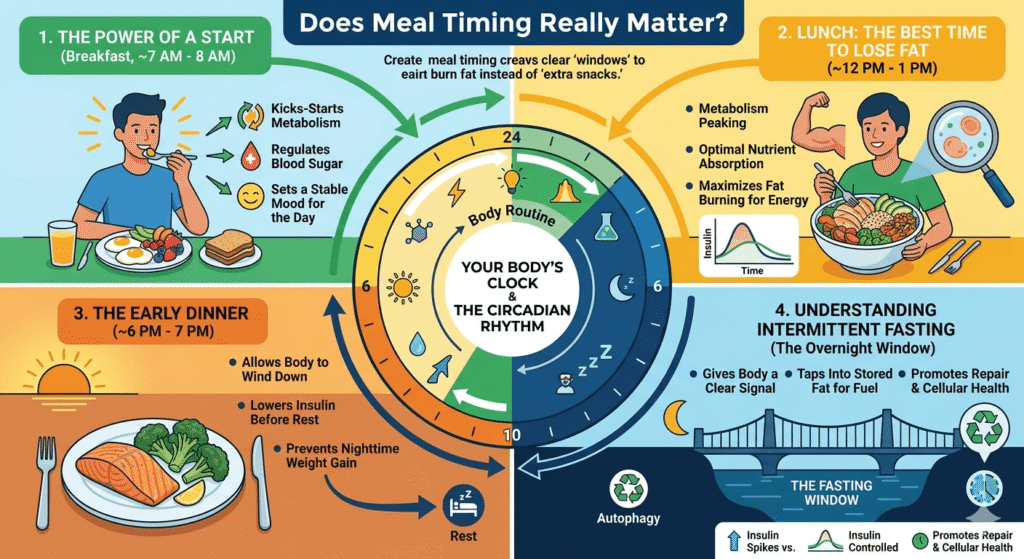
The short answer is: Yes. Your body has a routine that is like a clock. This clock is called the rhythm. It controls when you sleep and wake up. Moreover, how your body makes hormones and uses energy. When you eat at these times your body has trouble using the food properly.
When you optimize your meal timing properly, it keeps your insulin level at a certain level. Your body will have a clear window where it will know when it has to burn stored fat for energy. You don’t have to rely on eating extra snacks all the time.
1. The Power of a Start (Breakfast)
Breakfast is one of the most important meals of the day. You can wake up early and make a nutritious breakfast. It doesn’t necessarily mean that you have to start eating immediately after waking up. You can take it out sometime before you start eating. However, this will stabilize your blood sugar level for the day.
Why Early is Often Better
According to researchers, the human body is more insulin sensitive in the morning. Your body starts moving out the sugar in the cells more effectively and later it is used as energy. During the day time your metabolism is at its peak. You can eat your heaviest meals during the day. It will help you lose weight quicker at this time even when you are consuming a lot of calories.
2. Lunch: The Best Time to Lose Fat
By the middle of the day your body is working hard. This is the fat loss timing. Because you are probably active in the afternoon your body can use the energy from lunch away instead of storing it. During the day your lunch has to be balanced. The best idea will be to include some proteins, or something like sweet potatoes. It will help you feel full and won’t feel the need to look out for snacks later on. When you have good nutrition for lunch, it will lead to less eating at dinner.
3. The Early Dinner
Many people make mistakes during the modern diet. They eat a massive meal before going to bed, which can lead to a lot of weight gain. At night our metabolism is slow and it starts preparing for rest and healing. It is not suitable to eat a heavy meal during this time as the digestion will be slow and you won’t even sleep properly.
You have to eat your meal 3 hours before going to bed. At this time your body produces melatonin which is a sleep hormone which slows down the production of insulin. When you eat a heavy meal at night, your blood sugar remains very high and this leads to a lot of fat storage.
4. Understanding Intermittent Fasting
If you are looking for a way to manage your schedule, intermittent fasting timing is one of the most popular methods available today. It is not a diet; it is a pattern of eating that tells you when to eat, not what to eat.
Many people start their diet with the 16:8 methods. This is turning out to be a popular method as it involves not eating any food during 16 hours. You can eat what you want during the 8-hour period. For example, you can eat during the 10 am to 6 pm eating window. If you are not satisfied with this option, going for the 14:10 method can be more flexible.
It offers a 10 hour eating window. Some people are also focusing on the ‘one day a meal approach’, but it requires good planning. By narrowing your eating window you give your system a long break. This lowers your insulin levels making it easier for your body to burn stored fat.
The Science of the "Feeding Window"
A consistent eating schedule is more about being disciplined with your hormonal harmony. When you try to eat at the same time every day, your body will adjust accordingly. Your body gets the fuel at the right time. The hunger hormone is known as ghrelin.
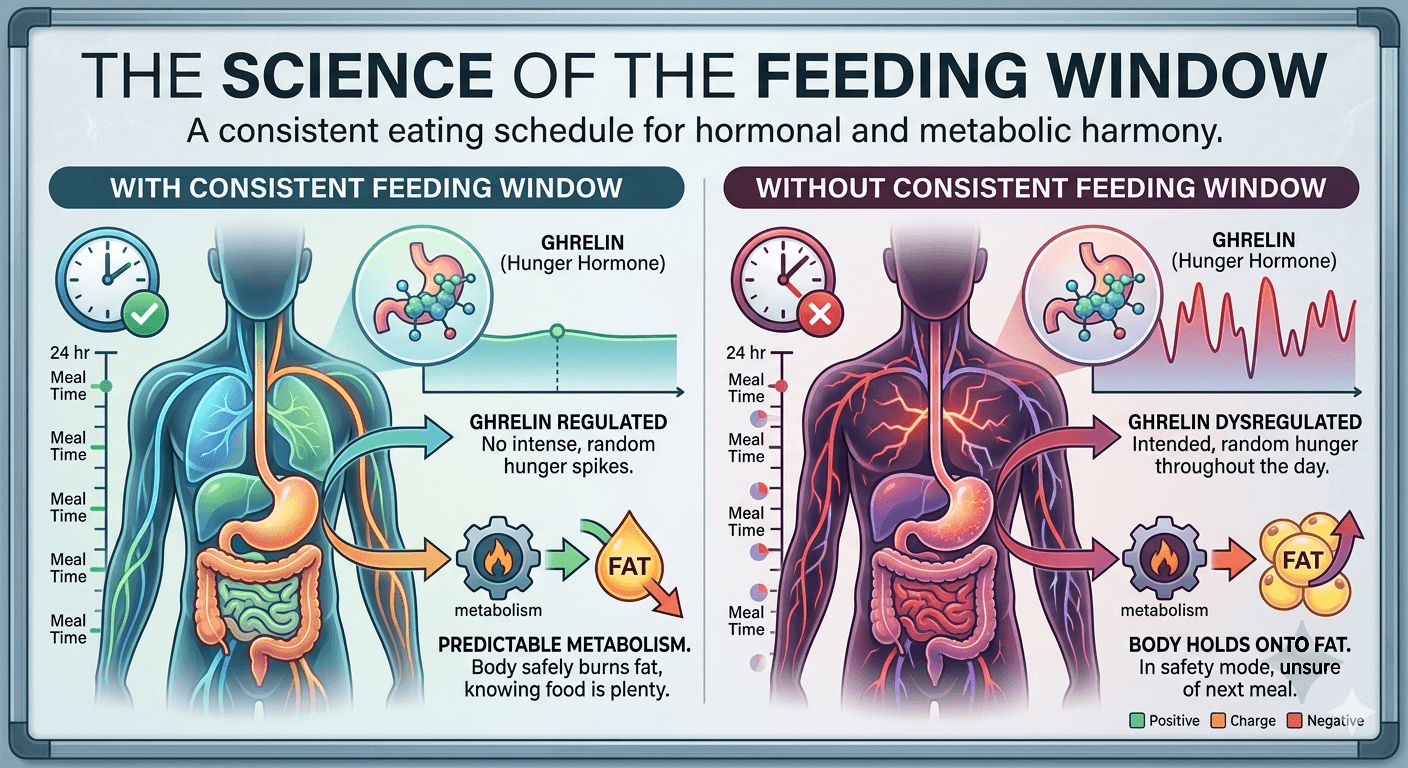
It is easy to regulate your ghrelin this way and you will not feel an intense hunger on random timings of the day. Consistency helps your metabolism burn fuel predictably. If your body does not know when the next meal is coming it may hold onto fat. A regular routine tells your system that food is plenty and it is safe to burn energy.
Post-Workout Timing
If you exercise your timing needs to shift to support muscle recovery and energy levels.
1. Before Exercise: Low-intensity cardio on a stomach can help tap into fat stores. For lifting or high-intensity interval training a small snack with carbs and protein about 1 hour before can improve performance.
2. After Exercise: Eat within 45 to 60 minutes after a workout. This is when your muscles soak up nutrients to repair themselves.
Common Pitfalls to Avoid
Whenever you are on a diet it can be difficult to continue with the same enthusiasm. With the best meal timing certain habits can ruin your progress.
Grazing:
Constant snacking keeps insulin. Healthy snacks can prevent your body from switching from “store mode” to “burn mode.”
The Night “Kitchen Raid”:
Eating at 10 PM is usually due to boredom or stress. Since your metabolism is slowest then these calories are likely to be stored.
Skipping Meals to “Save” Calories:
Skipping lunch often leads to an uncontrolled dinner. It is better to have moderate energy intake.
How to Build Your Perfect Schedule?
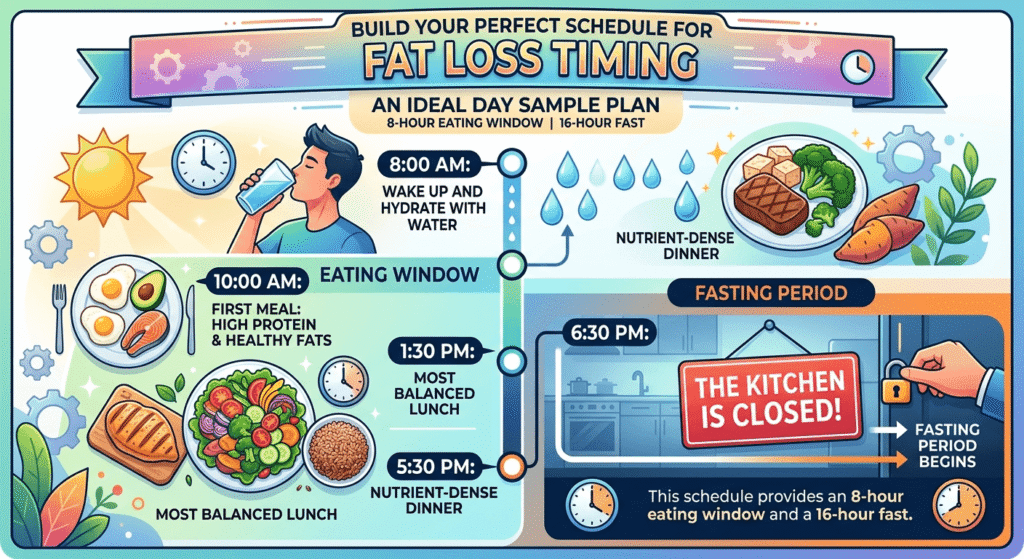
So what does an ideal day look like for someone focused on fat loss timing? Here is a sample plan:
- 8:00 AM:
Wake up and hydrate with water.
- 10:00 AM:
Your meal with high protein and healthy fats.
- 1:30 PM:
Your most balanced lunch.
- 5:30 PM
A nutrient-dense dinner.
- 6:30 PM:
The kitchen is closed! This starts your fasting period.
This schedule provides an 8-hour eating window and a 16-hour fast.
Listening to Your Body
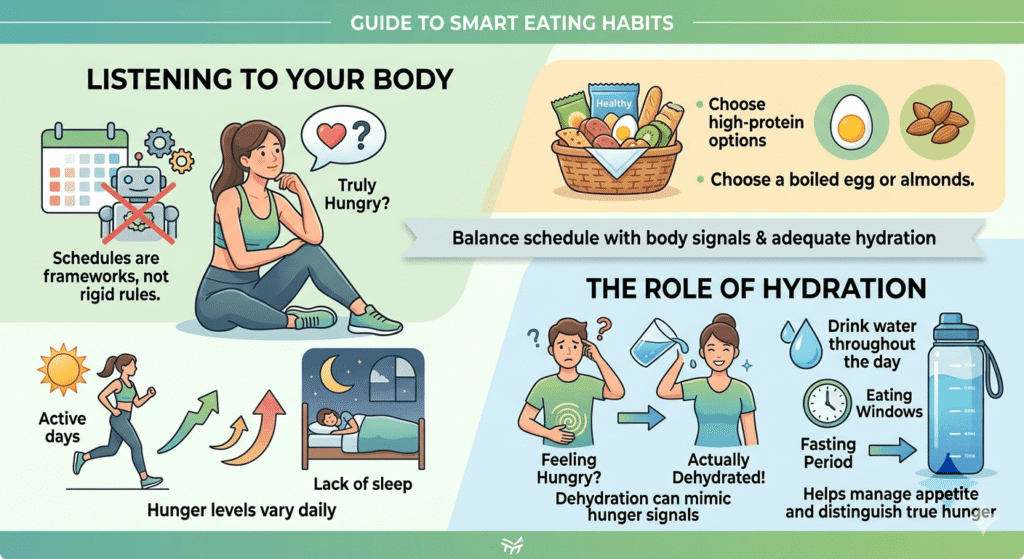
While schedules are helpful, you are not a robot. Some days you might be hungrier than others especially if you were more active or did not get sleep. The goal of an eating schedule is to provide a framework. If you are truly hungry outside of your window, listen to your body. Choose a high-protein snack like a boiled egg or almonds.
The Role of Hydration
When we feel we are hungry, the actual reason is that we are dehydrated. When we are dehydrated it gives us a feeling or hunger. It leads to us starting eating, even when you don’t need to. When you keep drinking water throughout the fasting period and in between your eating windows, it will be very helpful.
Final Thoughts
Losing weight can seem like a difficult journey. However, if you plan your day wisely, it can turn out to be better. Focusing on the timing, because when you are eating will play an important role when it comes to losing weight. It is best to start eating light at night and try consuming heavy food during the day.
Remember to eat with the light and consume most of your calories during the day. When you start your day with protein it will help stabilize your sugar. Close the kitchen early as it will give your body the time to digest your food before sleeping.
Most importantly, you have to remain consistent and stay hydrated. Weight loss is a journey. Adjusting your timing is a simple tool. Give your body a break, at night feed it well during the day and watch how efficiently your metabolism works for you!