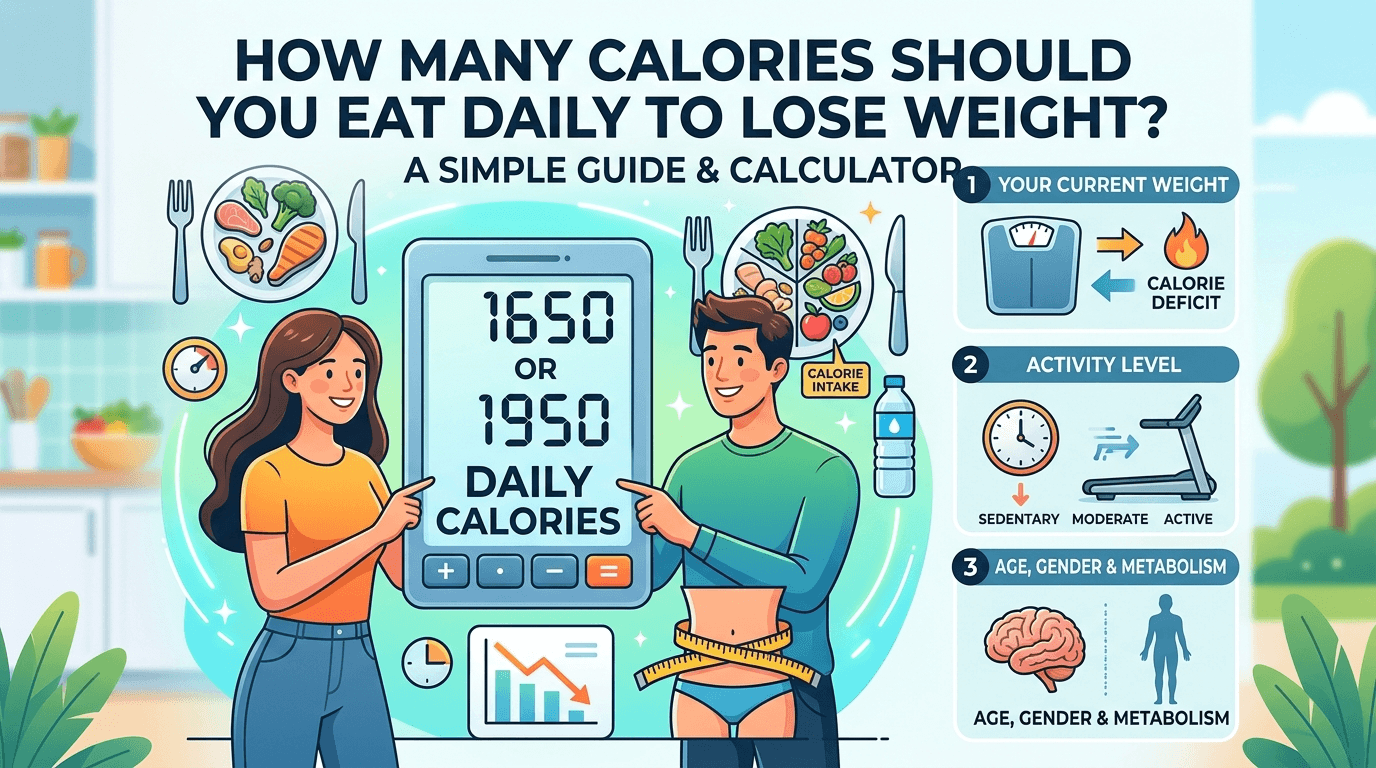
How Many Calories Should You Eat Daily to Lose Weight? A Simple Guide

How Many Calories Should You Eat Daily to Lose Weight? A Simple Guide

It can be challenging to determine how much a person should eat daily to lose weight. However, weight loss is fundamentally about understanding energy. According to recent health data, around 45% reported they are trying to lose weight. Yet many struggle as they don’t have a clear starting point when it comes to their nutritional needs.

If you are trying to lose weight, listening to various diet advice can be overwhelming. You need to set up a property strategy according to the needs of your body. When you have the basic understanding of your body’s fuel requirements, it will make your journey much easier. So Learn how to calculate daily calorie intake for weight loss. Discover simple tips for a calorie deficit and diet planning to reach your goals safely.

What is Energy Balance?

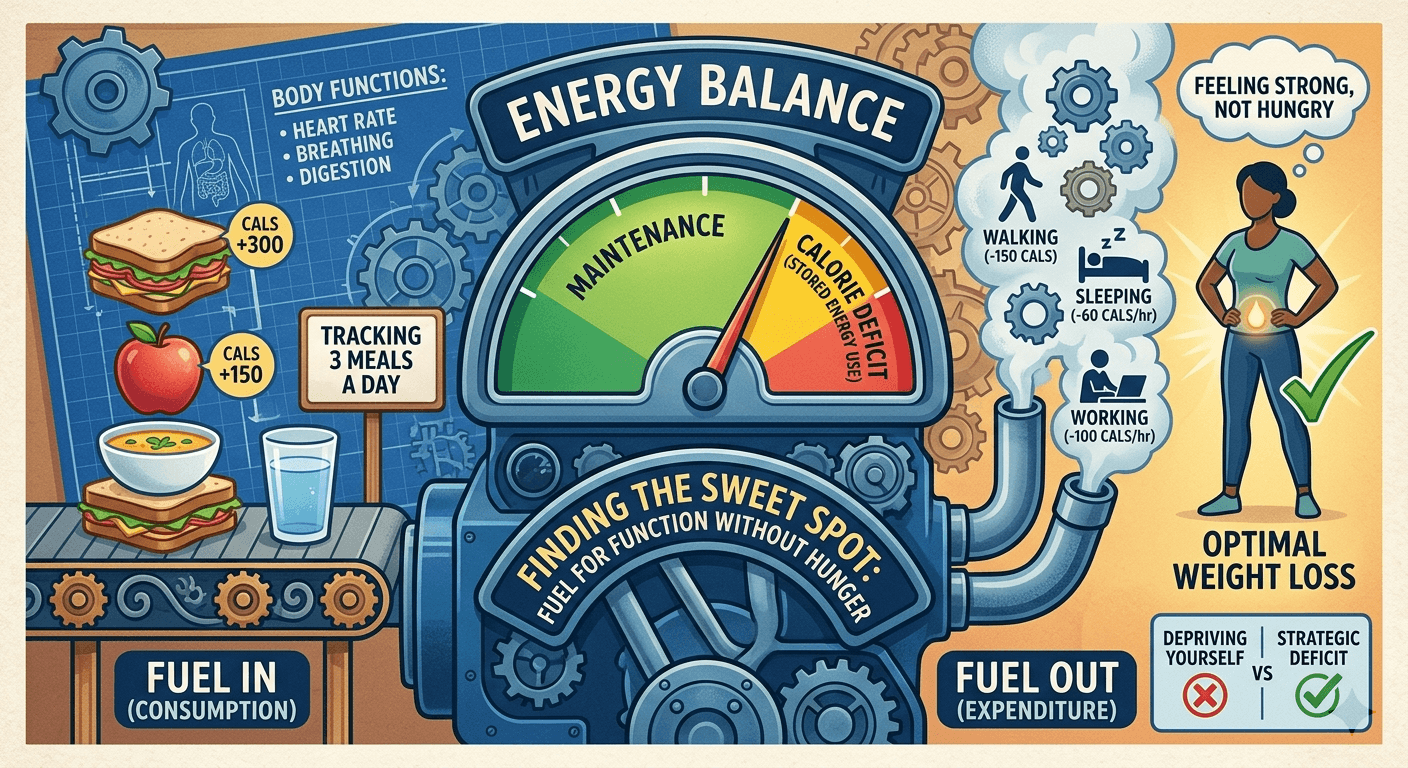
It is important to track calories that you consume during a day. Your body is like an engine that runs with fuel. Nearly all the functions of your body require energy.  We calculate this energy in terms of calories. When you are taking three meals a day, you are providing your body with some fuel.
what-is-energy-balance

You need to burn that fuel if you want to lose weight. It is important to burn more calories than the amount you take in, or else you will lead to weight gain. This is commonly known as calorie deficit.

Many people believe diet is all about depriving yourself. However, it is about finding the right spot, where your body starts using its stored energy (fat) for fuel. Especially, without making you feel weak or hungry all the time.

How to Calculate Your Daily Needs?

Every person has a different food requirement. A sportsman will require more food while a slim person who has a desk job will need fewer calories. Here is something you need to do before you calculate your daily needs.

1. Basal Metabolic Rate (BMR)

Your BMR is the amount of calories that your body burns when resting in order to keep yourself alive. In case you spend your entire day in bed doing nothing at all, the BMR that you would burn is that. It depends on your age, gender, height and weight.

2. Total Daily Energy Expenditure (TDEE)

It is the total amount of energy that your body uses within 24 hours. Whether you are walking, cleaning the house or doing the dishes. If you want to find out how many daily calories you need, multiply the BMR with total daily energy expenditure.

  • Little or no exercise
  • Moderate experience (3 or 5 days a week)
  • Hard exercises (6 days a week)

Once you have your maintenance number you can then deduct a little amount (usually 300 to 500 calories) to begin losing weight safely.

Health Calculator

Finding Your Target for Weight Loss

A pace of 0.5 to 1 kilogram (1 to 2 pounds) or so per week is regarded by most health experts as a safe rate of weight loss. To do this, you must be consistent in your weight loss calories as time goes by. Although the idea of reducing the amount of food you consume is very appealing in order to achieve quicker results, it tends to backfire. 

Eating too little can slow your metabolic rate and make you hungry, so it is far more difficult to follow your diet. A medium course of action is always healthier in the long run as compared to a crash diet.

The General Rule of Thumb

Although precise calculations are preferable, the majority of women can safely lose weight on 1500 to 1800 calories and the majority of men on 2000 to 2200 calories, based on their level of activity. These are however mere averages. The results of your own process will be determined by your body and its response to the two to four weeks of regular tracking.

Why Quality Matters as Much as Quantity?

You may have heard the saying of a ‘calorie being a calorie’. Although the same applies to weight loss, the same thing cannot be said about how you feel. Here is where the difference lies, imagine eating broccoli containing 500 calories vs eating a candy with the same amount of calories.

The broccoli is full of fiber, vitamins, and volume and will keep you full for several hours. The candy gives you a brief burst of energy and then a crash and you are hungry in half an hour. When you are on a calorie deficit it is best to eat foods that can make you feel full for a longer time. 

When you eat foods that are rich in protein or fiber will not make you feel hungry at night. As you are eating less but feeling full with foods like chicken, fish or lentils, your weight loss journey will be a success. 

The Importance of Diet Planning

Weight loss success is hardly ever accidental. It occurs by planning. Here, diet planning comes to your rescue. Without planning, you can easily pick anything that comes along your way when you are tired or hungry and this normally triggers overeating.

What to do to plan successfully:

1. Shop with a List:

You should not only go to the store when you are hungry. Make a list of your proteins and vegetables that are needed during the week.

2. Make Your Proteins Ahead:

Cooking a big batch of chicken or lentils on Sunday will make it a lot easier to create a quick meal on Tuesday night.

3. Smaller Plates:

This is a very basic psychological trick. A full small plate will be more rewarding than a half-full huge plate.

4. Monitor Your Progress:

Track with an app or a food diary. The general population estimates their consumption by approximately 30%. Tracking brings awareness.

Managing Hunger and Cravings

It is not surprising that you will feel hungry whenever you are on a diet. However, things can become easier if you follow these simple tips:

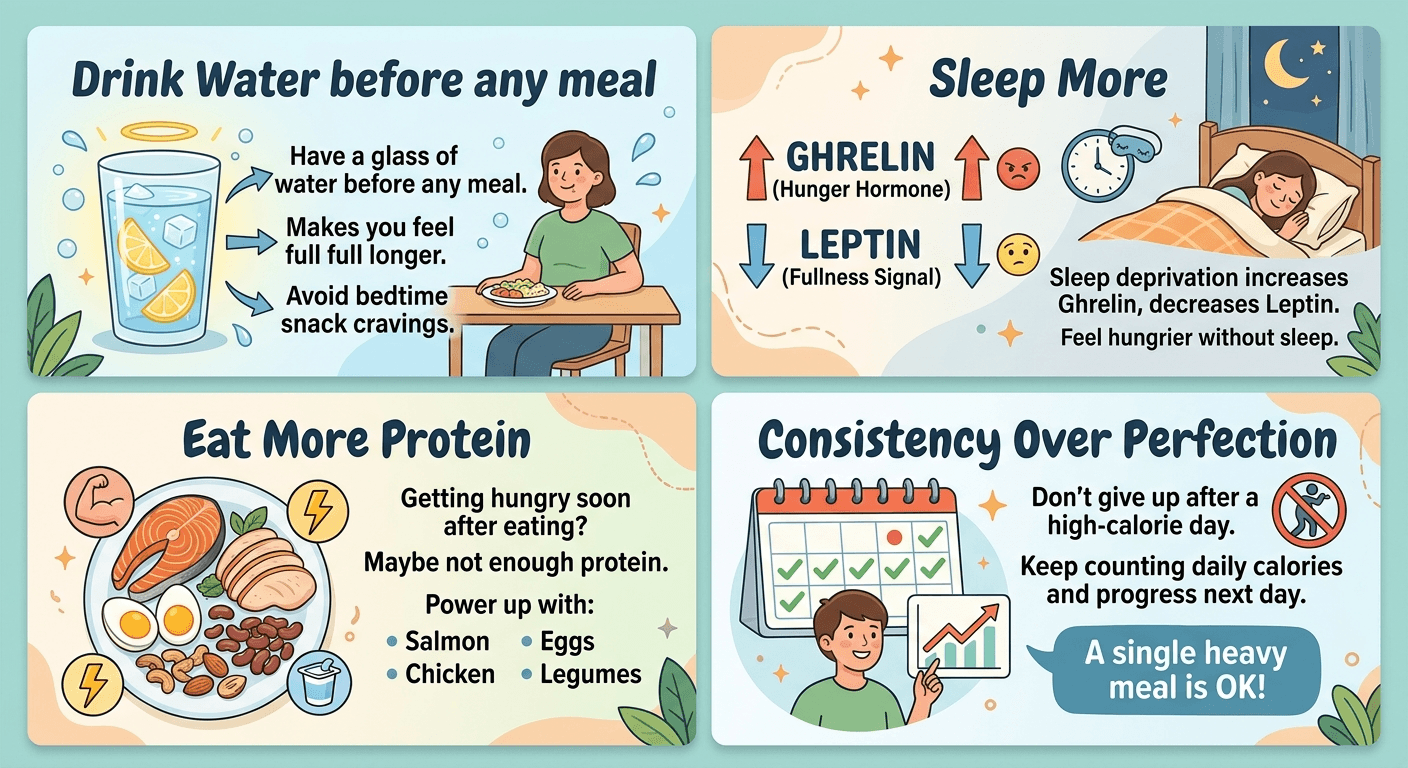
Drink Water before any meal

Try having a glass of water before you take any meal in the day. It will make you feel full for a longer time. You will not crave for a snack before going to bed.

Sleep More

People who are sleep deprived tend to become hungry. When you don’t sleep much the hormone ghrelin will increase and make you feel hungry. Leptin is a hormone that indicates the brain when you are full. However, with lack of sleep leptin drastically falls down.
daily-calorie-intake-for-weight-loss

Eat More Protein

When you get hungry soon after a meal, it is possible that you did not get enough protein.

Perfection is not important as much as consistency. When you have a day that you consume more calories than you had planned to consume daily, do not give up. A single heavy meal will not affect much if you are consistent throughout. Next day, you can keep counting the daily calories along with the progress.

Adjusting Your Plan Over Time

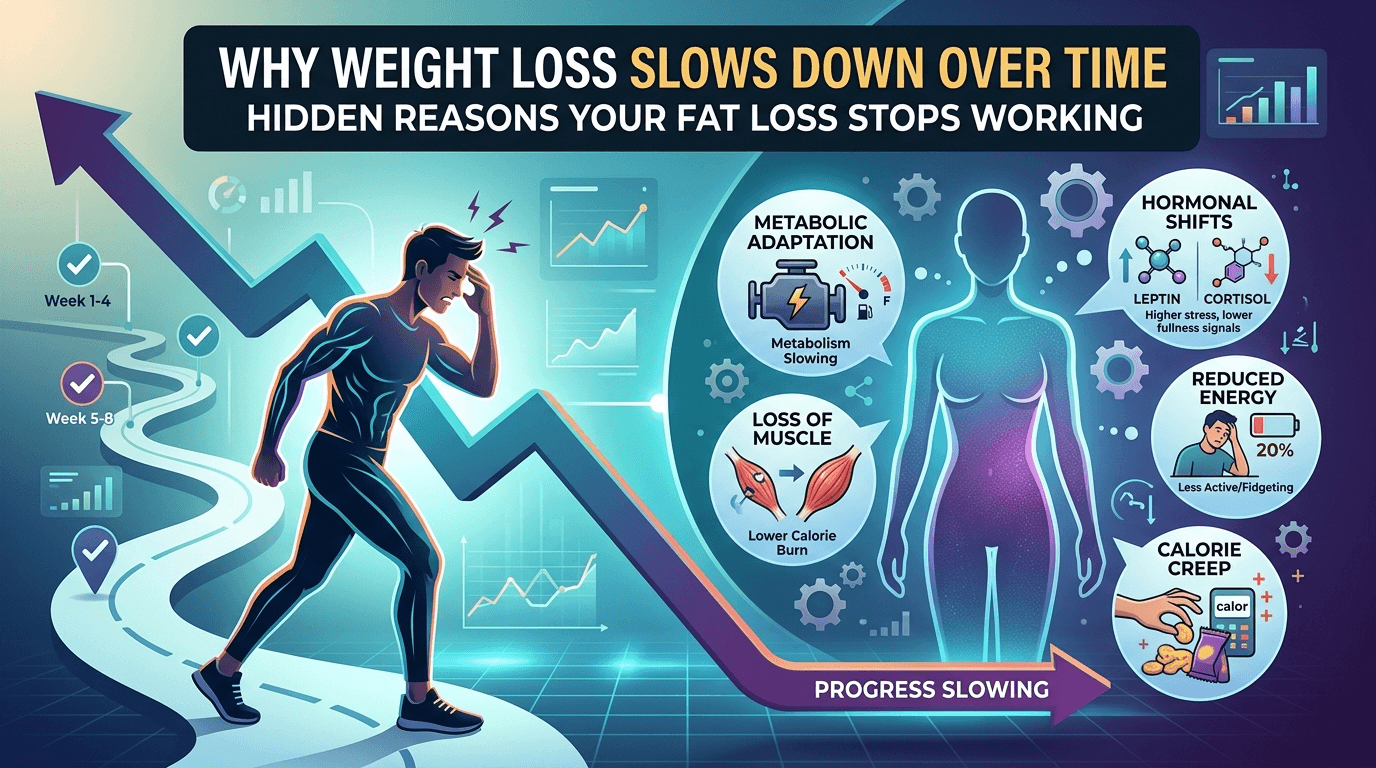
The fatter you are, the smaller and less energetic your body is. This implies that the calories that helped you to lose weight in the first month may have to be changed once you have lost 5 or 10 kilograms. The weight loss calories will remain consistent if you don’t change your routine much.

When you find that no progress has been made in your weight after three or four weeks, it may be necessary to slightly lower the amount that you are consuming or raise the amount of movement that you are doing on a daily basis. It is a normal aspect of the process and does not constitute a failure.

Common Mistakes to Avoid

Many people don’t have the awareness when it comes to losing weight. They fall for traps and in the end it’s all about frustration. These are some things that you need to avoid.

  • Drinking calories:

Sodas, juices, coffee and other sugary drinks contain a lot of calories. One drink will mean 600 more calories added to your diet. Use water or herbal tea instead

  • Miscalculating Portions:

Many people don’t have an idea of how to calculate their portions. While taking a tablespoon of peanut butter may look fine, but in reality it contains a high amount of calories.

  • Not paying attention to hidden calories:

A salad which contains a lot of dressing turns out to be really high in calories. Many people still eat it not realizing that it isn’t a healthy salad anymore.

Conclusion

Effective diet planning doesn’t mean you have to follow strict rules for a few weeks only till you reach your goal. It is more about creating a strategy and feeding your body in a way that you maintain for the rest of your life. Weight loss is more like a journey of self-discovery.

You understand when you feel energized and how much calorie intake you need. It is important to maintain a steady pace as you will not only reach your goal weight but also have the methods to stay there forever. The best weight loss plan is the one that you can actually follow. Start small and stay patient, your future self will thank you!

Nutrition Disclaimer

Nutrition Disclaimer

This content is for informational and educational purposes only and is not intended as medical or dietary advice. Nutritional needs vary by individual. Always consult a qualified healthcare or nutritionist professional or registered dietitian before making changes to your diet or lifestyle.

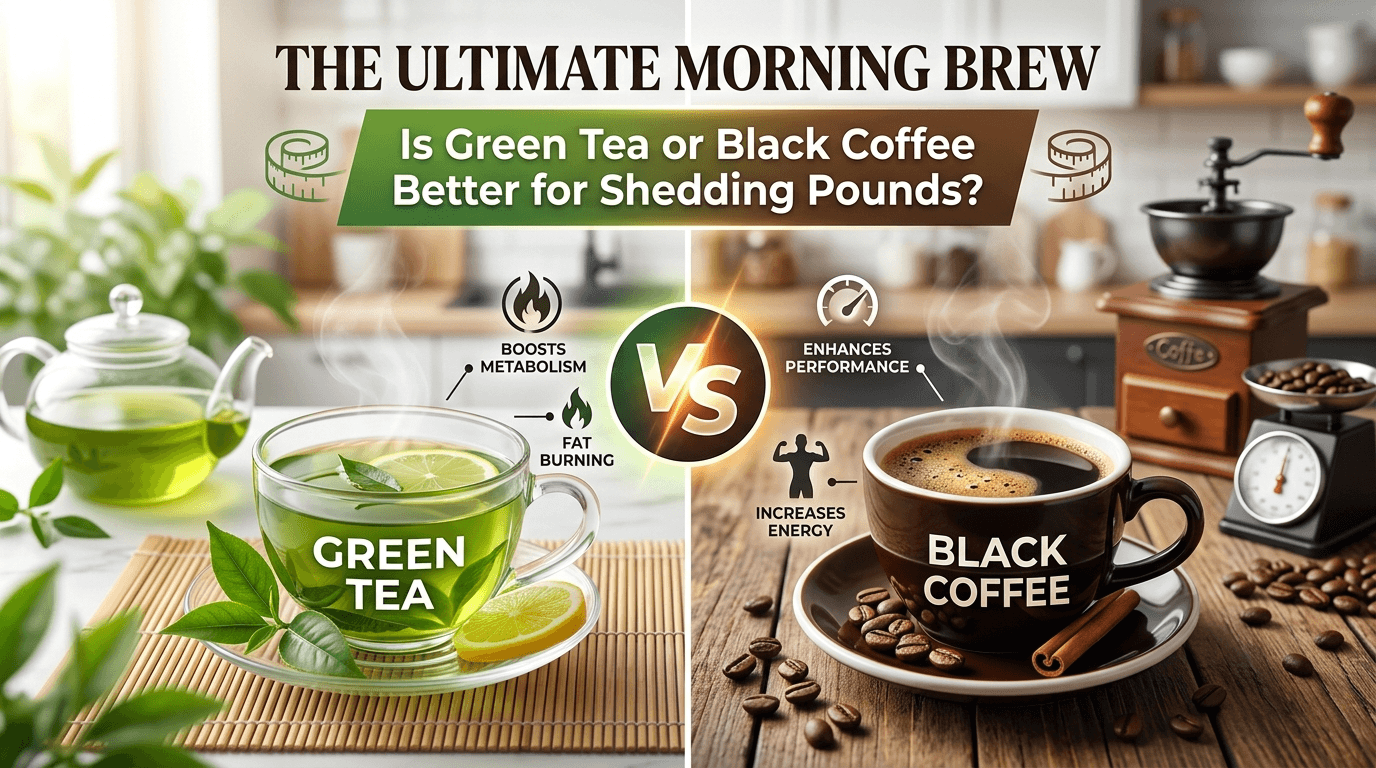
The Ultimate Morning Brew: Is Green Tea or Black Coffee Better for Shedding Pounds?
Previous post

Write a comment