
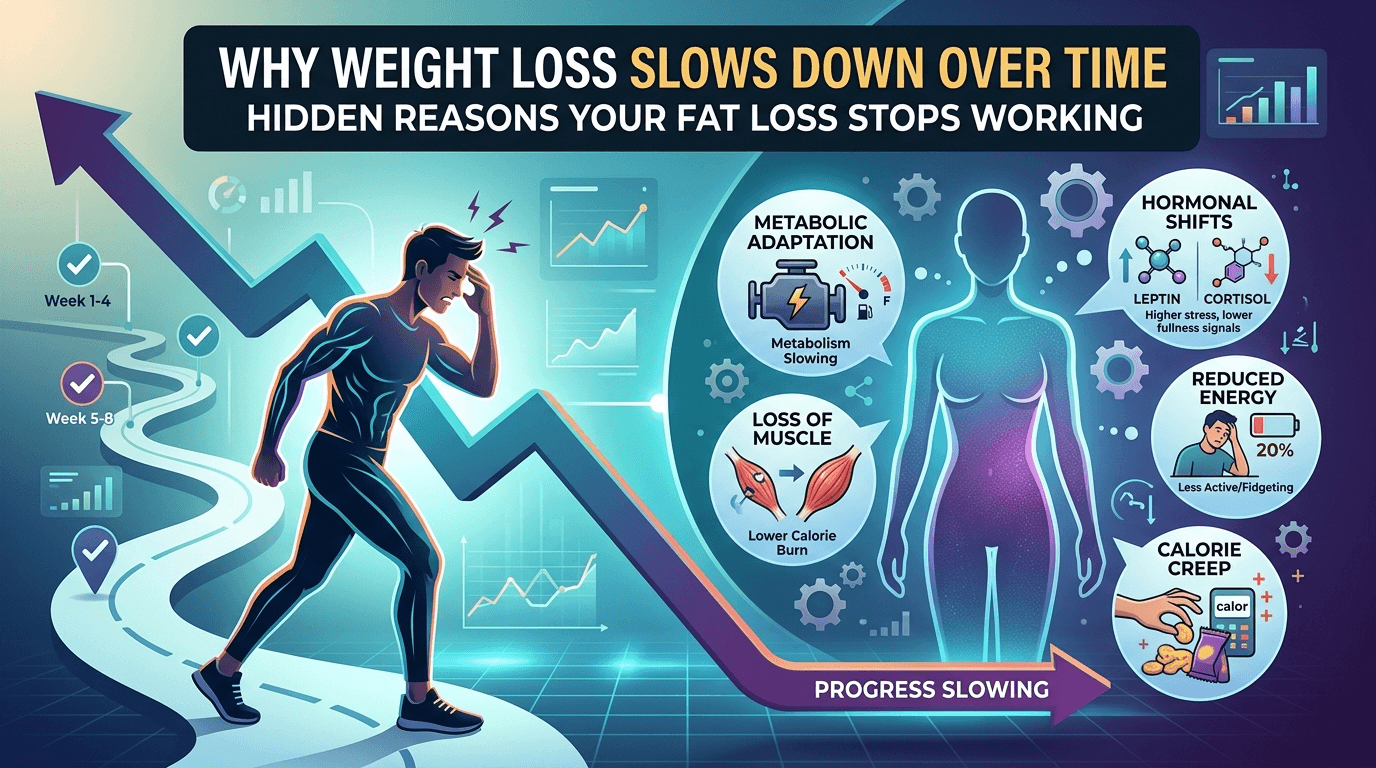
Even when you feel you are doing everything right, your body may hit a frustrating plateau. It doesn’t mean that there is a lack of effort from your side, this is how your metabolism works. Here are some hidden reasons that may hinder your fat loss.
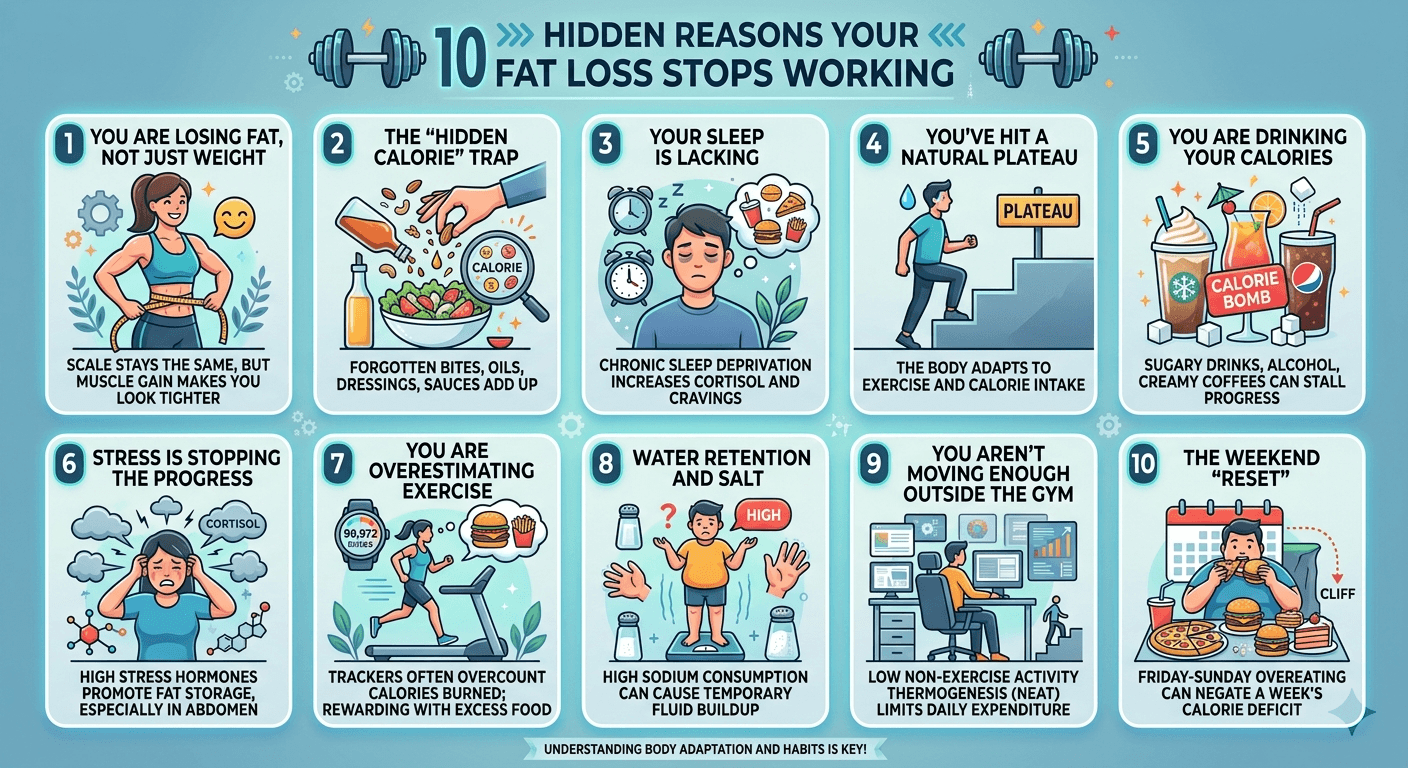
1. You Are Losing Fat, Not Just Weight
One of the biggest reasons for perceived slow weight loss is our obsession with the scale. The scale quantifies all: bones, organs, water, muscle, and fat. It is unable to distinguish between a gallon of water and a pound of body fat.
You may be gaining muscle at the expense of fat since you have begun to exercise. Muscle is far less dense than fat, which means that it occupies a smaller area. You may not gain or lose weight but your pants may fit or your jawline may be sharper. And this is what is really the best kind of progress!
2. The “Hidden Calorie” Trap
You may end up thinking that you are in a calorie deficit, but even minor diet errors can accumulate fast. Your additional 200 calories may be coming from one ingredient. The additional spur of olive oil in the pan? Another 120. Even healthy foods are not free of calories and unless one is keen on the portions, they may find themselves eating at a maintenance level and not a loss level. This is important in terms of consistency. It does not mean to be perfect, it means to notice the little things that fall through the cracks on the busy day.
3. Your Sleep is Lacking
If you aren’t sleeping, your body isn’t losing. It is during sleep that your body is busy repairing itself, and balancing the hormones that control hunger (ghrelin) and fullness (leptin). Sleep-deprivation causes your levels of ghrelin to shoot up and you are more than likely to crave high-calorie and sugary foods the following day.
Moreover, insomnia elevates cortisol, a hormone that elevates stress, which instructs your body to store fat- particularly in the belly. When the scale is jammed, look at your pillow, then your plate.
4. You’ve Hit a Natural Plateau
Our bodies are intelligent. They are made to survive and not to wear a swimsuit. When you lose weight, your body will finally realize that it is receiving less energy and it will protect its existing weight. It is at this point that metabolism issues frequently enter into the picture.
When you become smaller you really require less calories to operate. When you continue to eat the same as you did when you weighed 20 pounds heavier, you will automatically reduce. This is an indicator that your body has become accustomed and you may need to shake your routine a little- maybe by increasing or decreasing your workout intensity or slightly changing the protein consumption.
Understanding the Role of Protein
The most crucial nutrient in fat loss is protein. It is high in terms of thermic effect i.e. your body burns more calories digesting protein than it does digesting fats or carbs. In addition, it makes you full. When you eat mostly carbs, you are likely to get hungry again in an hour which results in these minor diet errors that we have discussed above.
5. You Are Drinking Your Calories
It is very easy to forget about liquids. A latte in the morning, a glass of orange juice, or even a so-called healthy smoothie may contain hundreds of calories, but will not satisfy you. These calories in liquid form do not provide the same fullness signals in the brain as does solid food. Replacing them with water, black coffee, or herbal tea can be the easiest method of jump starting a dead-end trip.
6. Stress is Stopping the Progress
Chronic stress is a silent killer of weight loss. When you are stressed all the time, either at work, with family, or even worrying about the scale, your body remains in the fight or flight mode. In this condition, your organism believes that there is a physical crisis and it clings to energy (fat) with its nails. A five minutes’ walk or deep breathing every day can help your waistline more than an additional hour of exercise.
7. You Are Overestimating Exercise
One of the pitfalls is eating back the calories you lost in the gym. The number of calories that you actually burn during a workout is exaggerated by most fitness trackers and gym machines. When the treadmill reports that you have burnt 500 calories, and you reward yourself with a 500-calorie muffin, then you have undone your efforts. Workout is to keep the heart, be strong, and have a clear mind. Allow the kitchen to do most of the weight loss.
8. Water Retention and Salt
You had a salty supper last night, and you should not be surprised to find the scale two pounds higher to-day. Salt retains water. On the same note, when you are a woman, your monthly cycle may lead to a lot of water retention that prevents real fat loss during a week or two each month.
This isn’t a permanent weight gain; it’s just fluid. When you experience a spike all of a sudden, remember what you had to eat or where you are in your cycle before you begin to panic about your slow weight loss.
Are You Eating Enough?
It may seem counterintuitive but consuming a small amount of food may also lead to metabolism issues. When you reduce your calories too much (such as in a crash diet) your body will go into starvation mode. It reduces the rate of heart and body temperature to conserve energy.
9. You Aren’t Moving Enough Outside the Gym
It is known as NEAT (Non-Exercise Activity Thermogenesis). This is all the movement you make that is not exercise: walking to the car, washing clothes, pacing the house when you are on the phone, or cleaning. Even when you exercise one hour and spend the rest of your fifteen hours at a desk, then you may not be moving much during the day. I
10. The Weekend “Reset”
This is one of the most common fat loss mistakes. Monday to Friday afternoon, many people are very strict. Friday pizza will then translate to Saturday brunch which will translate to Sunday roast.
By Monday, you have consumed all the calories that you spent making a deficit in the week. You are not failing; you are simply settling in at a net zero.
If you feel that your weight loss journey is halted at a certain point, here is how to keep going.
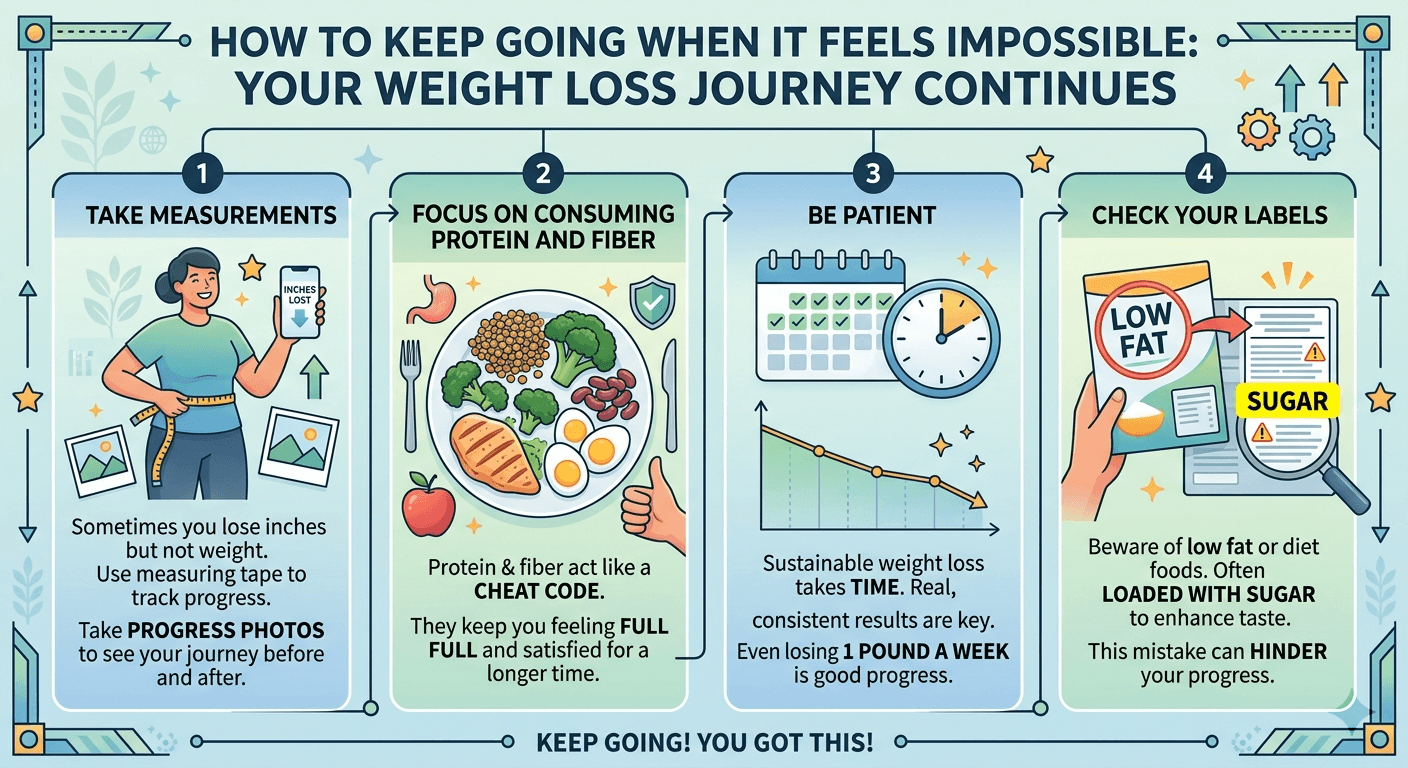
- Take measurements: Use a measuring tape to measure yourself in inches. Sometimes you lose weight in inches but your overall weight remains the same. You can take progress photos that will help you see before and after the journey.
- Focus on consuming protein and fiber: When you consume protein and fiber it will make you feel full for a longer time. It is more like your cheat code when you are on a diet.
- Be patient: People have to understand that sustainable weight loss can take a lot of time. It will be real and remain consistent over time. If you are losing 1 pound in a week, that is good progress.
- Check Your Labels: You have to be aware of low fat or diet foods as they are loaded with sugar. They do it to enhance the taste and this mistake can hinder your weight loss journey.